What an empty white sheet taught us about citizen science
July 25, 2026
Connection Matters: How small actions create big change
August 10, 2026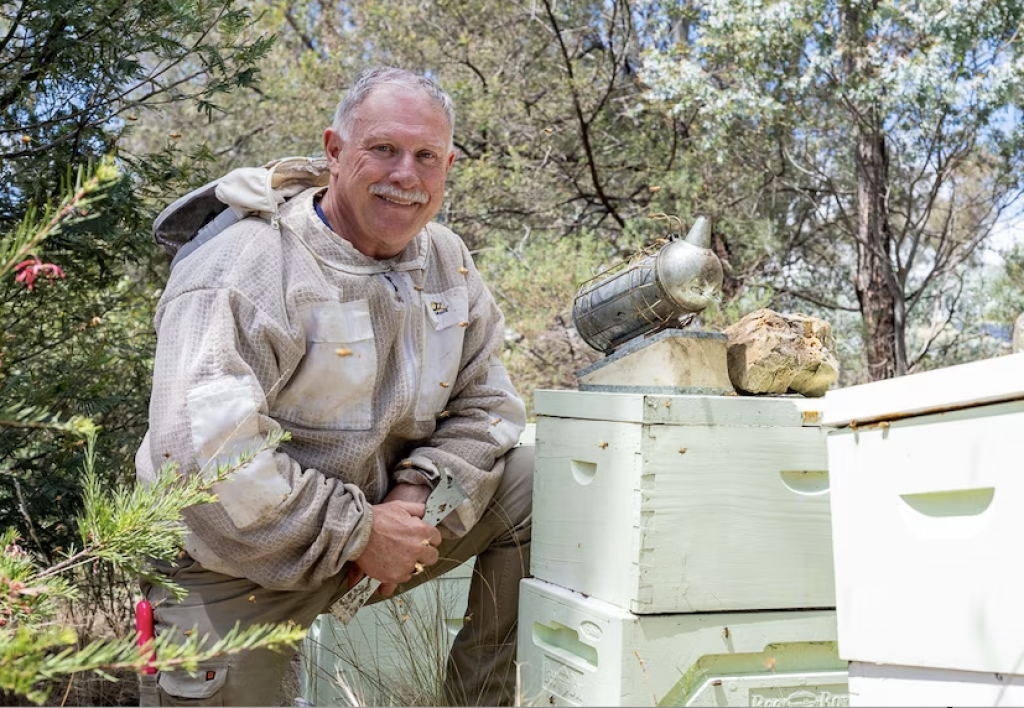
Across the Canberra region the arrival of the Varroa mite (Varroa destructor) is no longer a threat: it is here, establishing itself, and reshaping how we keep bees.
Since its first detection in the ACT in 2025 Varroa has spread rapidly, with reports now from across the territory. It is estimated, according to ACT Biosecurity, that more than a 1,000 hives have already been lost, and that around half of the 6,000 hives in the ACT have been impacted.
Impact of Varroa on honey bees
Varroa mites feed on both developing and adult honey bees, weakening individuals and spreading harmful viruses. Left unmanaged colonies typically collapse within one or two years.
Globally Varroa has already reshaped beekeeping practices. Australia is now going through that same transition, but we do so with the benefit of international experience.
For local beekeepers the arrival of Varroa means increased and more regular hive monitoring, and more active, timely, management.
What about native bees?
The good news is that Australia’s native bees are not directly affected by Varroa, as the pest is specific to the European honey bee (Apis mellifera).
Changes in honey bee populations, particularly through the loss of feral colonies in bushland. Will impact pollination success across gardens, farms, and bushland, It will also likely shift competition for floral resources and alter natural ecosystems.
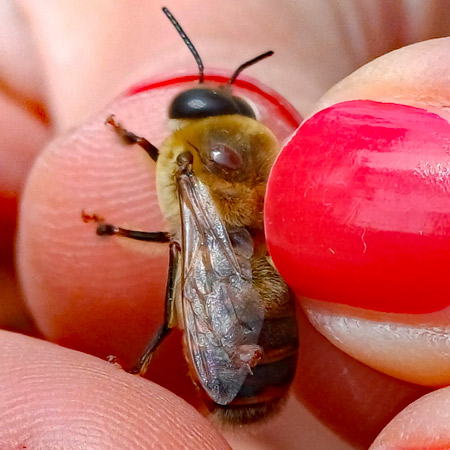
Varroa mites on a honey bee, found in a Kenya Top Bar Hive in the Australian Capital Territory.
While native bees may benefit in some situations, the overall picture remains complex (this is an area being actively researched by ecologists at the Australian National University).
Australia’s native bees, though, simply can’t backfill the large-scale pollination services provided by honey bees, as hive numbers decline due to the arrival of Varroa.
The scale of pollination services provided by European honey bees is critical for the productivity of humanity’s food supply. Many crops rely on the large numbers and foraging range of honey bees in managed hives. Native bees are essential for biodiversity and the specialised pollination of some selected crops (think blueberries and avocadoes), but at scale they cannot substitute for the work honey bees carry out.
Our goal in response to Varroa therefore should be to support all pollinators, both within the ACT region and more widely.
Adaptation to Varroa is already happening—if we allow it.
This process will take time, and require us to think beyond intensive chemically managed agriculture. Such a rethink offers real hope for the future. For example in the Hunter Valley wild colonies of European honey bees surviving with Varroa have already been observed. These unmanaged colonies appear to have adapted, and demonstrate that resilience is possible under Australian conditions.
This is a longer-term but more sustainable approach for the management of Varroa, and the pathway I wish for us to follow. I would like to see a future in which the honey bees that have been selected are able to manage Varroa themselves in our managed hives, without needing to use toxic chemical treatments (or any further human intervention).
This way of thinking is supported by successful overseas experience, and the high genetic diversity of European honey bees in Australia from which this behaviour might be selected.
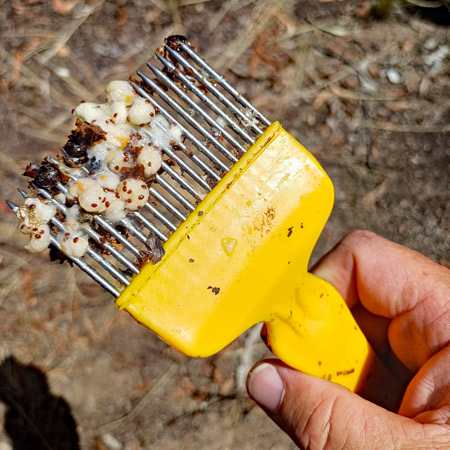
A non-chemical, mechanical method of controlling Varroa mites by uncapping and removing drone brood. Varroa mites preferentially reproduce in drone brood because the longer development time of drone bees allows more mites to mature before the bee emerges. By removing infested drone brood, beekeepers can significantly reduce mite numbers as part of an integrated pest management (IPM) approach.
Learning from overseas: hygienic bees
One of the most promising long-term responses is to breed bees with Varroa Sensitive Hygiene (VSH), an ability to detect and remove mite-infested brood (larva in capped cells developing into pupa and adults bees).
In California Randy Oliver, through his work with Golden West Queen Bees, has been a leading voice in this space. Rather than relying on chemical treatments he has focused on practical and field-tested strategies for selecting bees that naturally suppress Varroa mite populations.
Similarly in the United Kingdom locally adapted Varroa-resistant lines of honey bees are being identified and propagated. Cuba is often cited as a country where beekeeping has relied less on synthetic treatments, instead focusing on bee health, genetics, and management.
This research and experience demonstrates that hygienic behaviour can effectively reduce Varroa reproduction to restore colony survival rates. For ACT beekeepers this represents an important shift in emphasis.
While no single model fits all environments, these examples encourage us to think beyond heavy chemical dependence and take a more holistic approach and longer term view of bee health.
Rethinking our food system
Varroa is not just a beekeeping issue—it is a food system issue.
Pollination by honey bees underpins much of what we grow. Fewer healthy honey bees means reduced productivity across commercial agriculture and home gardens alike.
A more sustainable future in which all pollinators thrive may include:
- reduced chemical use
- greater biodiversity in crops and landscapes, which provide habitat and resources for native and honey bees
- closer connections between food producers and local communities.
Healthy bees are a reflection of a healthy environment.
A different way of seeing bees
In his book Honeybee Democracy the noted bee researcher Thomas Seeley reminds us that honey bee colonies are complex, intelligent superorganisms. With this understanding we should aim to work with bees—rather than against their natural behaviours. This may be one of the most important shifts against the industrialisation of our food supply we can make.
What can we do as individuals?
There are practical, positive steps we can all take at a local level:
- Plant for pollinators (both native and honey bees)
- Support local farmers’ markets and other direct-to-consumer growers
- Join ACT for Bees and Pollinators or your local beekeeping association
- Join the conversation on the ACT for Bees and Other Pollinators Facebook page.
- Deplore the use of pesticides and other environmental poisons
- Advocate for pollinator-friendly policies (realise that convenience food has a huge cost to the environment)
- Keep learning and sharing knowledge.

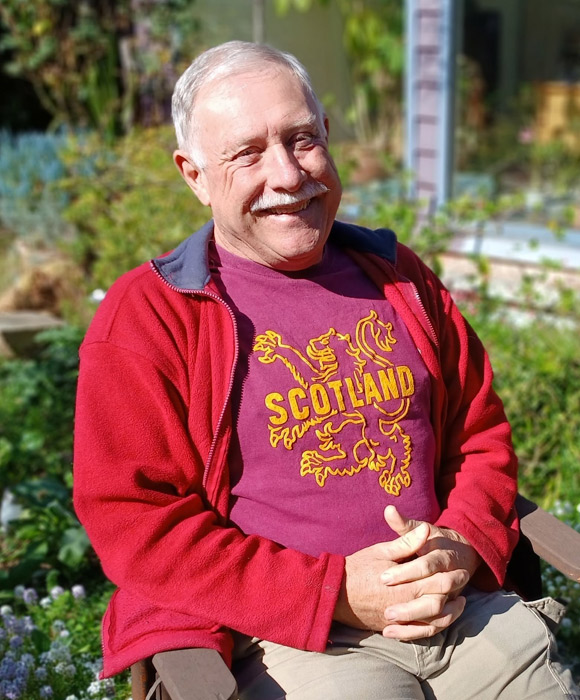
Repeat this mantra: love food, love bees
Our relationship with bees is deeply connected through the food we eat, the landscapes we shape, and the future we choose.
While the varroa mite presents a challenge, here in Canberra and elsewhere, it also presents an opportunity: An opportunity to rethink, to adapt, and to build something better.
Together we can provide supportive environments for all pollinators, encourage resilient bees living in thriving ecosystems, and ensure a healthy food system for future generations.
Mark Paterson
Optimist and Vice President
ACT for Bees and Other Pollinators