Pollinator adventures for curious kids
September 17, 2026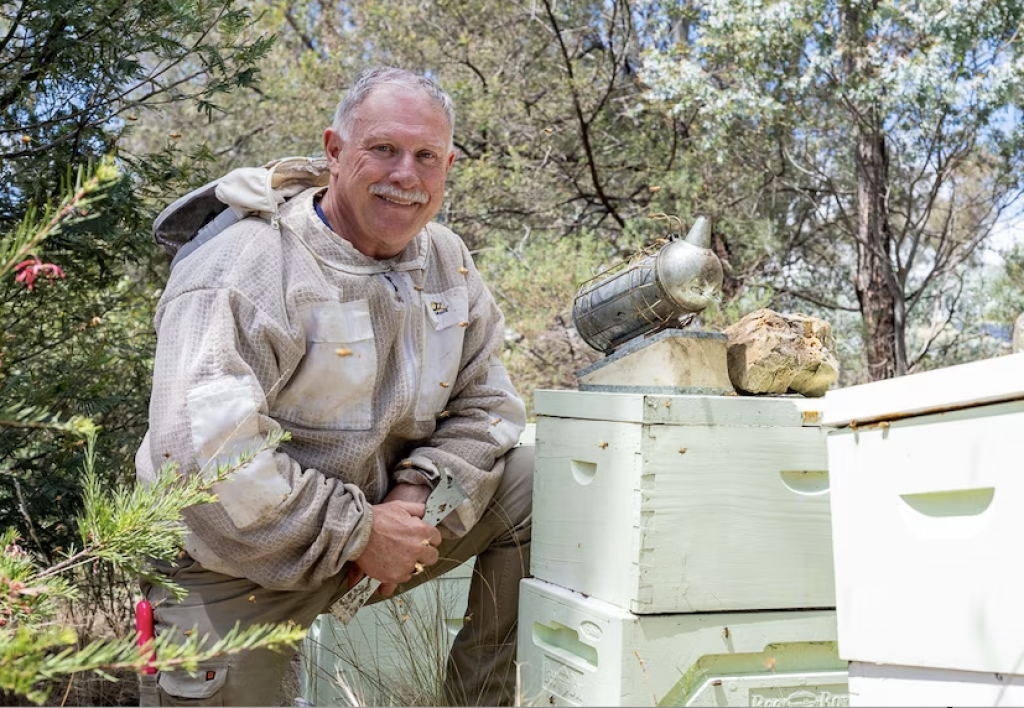
What Bilpin, Thomas D. Seeley and Charles Darwin teach us about Bilpin apples
In our article, Varroa mites, bees, and our future food system: A reckoning and a road ahead, we examined the arrival of Varroa mite (Varroa destructor) in Australia and the threat it poses to honey bees, beekeepers and our food system. Now we need to ask the next question:
Where have all the bees gone?
Bilpin: When the apples disappeared
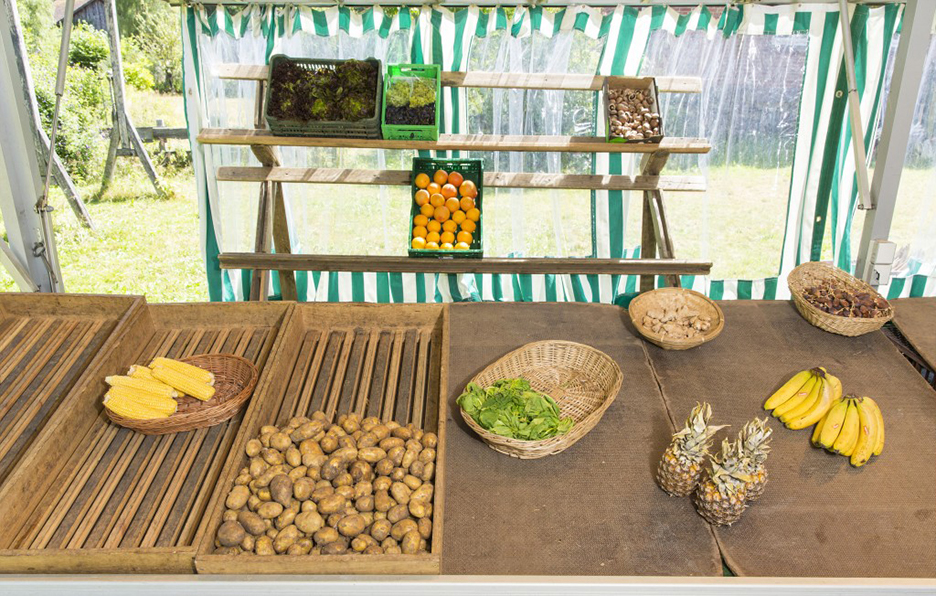
Bilpin, lying at the base of Sydney’s Blue Mountains, is famous for its apple orchards and Apple Pie Trail. In 2025, though, many growers experienced an extraordinary crop failure. Apple grower Bill Shields told the ABC that his orchard produced only around 5–10 per cent of a his normal, expected, apple crop. He also said that of the eight orchardists still operating in Bilpin, at least six had suffered crop failure that season.
For generations two honey-bee populations have existed in Australia: colonies managed visibly in hives by beekeepers, and invisibly existing wild, or feral, colonies living in tree hollows or other odd unnoticed spaces.
Varroa was identified as a likely cause. Evolutionary ecologist Simon Tierney, who has studied the honey bees around Bilpin’s orchards, estimated that honey-bee their numbers in the area had fallen by around 80 per cent, probably because the varroa mite had devastated feral colonies. This rate is consistent with overseas research, which even recorded higher rates of loss.
This raises the important question:
When large numbers of wild honey bees are not there, what replaces the pollinating function they once provided?
Pollination, like your house or car insurance, is easy to overlook because when it works (or the insurance is not required) nobody notices. A bee visits a flower, pollen is transferred, and the flower’s fertilised ovule develops into fruit. Months later we see the ripening apple, but rarely think about the bee-facilitated pollination event that helped create it months previously.
Over the years these feral bees have been quietly adding to the pollination effort across farms, gardens and natural landscapes. Varroa has changed that. Managed hives are visible. Feral colonies are not. When a beekeeper loses a hive, the loss is obvious. When wild colonies disappear from tree hollows and buildings, the loss is unlikely to be noticed. The consequences may only become apparent later through reduced pollination and poor fruit set.

Bilpin therefore provides an important lesson—that pollination resilience matters.
What more can the bees teach us?
This leads to a bigger question for beekeepers:
Do we only need better ways to control Varroa, or do we also need bees that are can better able to live with the mite?
North American researcher Thomas Seeley investigated wild honey bee colonies living without the protection and management provided by beekeepers, and reported his findings in The Lives of Bees: The Untold Story of the Honey Bee in the Wild. Wild colonies select their own nesting sites, swarm, regulate their populations and respond to parasites and disease. They survive—or they don’t. Over generations only the most resilient and successful colonies survive.
The Arnot Forest in upstate New York, where Seeley and colleagues did their research, provides an important result: they found honey bee colonies that were surviving despite being infected with Varroa. These bees were not necessarily eliminating the mites; rather, the colonies appeared capable of controlling them enough to maintain a balance that allowed them to survive and reproduce. Possible adaptations include higher levels of grooming, hygienic behaviour, Varroa-sensitive hygiene (the ability to detect and remove infected brood), or reduced mite reproduction and other genetic or population traits.
The important point is simple: a honey bee colony naturally surviving varroa infestation contains information from which we may learn.
Seeley’s work has contributed to what is sometimes called Darwinian Beekeeping—using an understanding of natural selection as part of responsible beekeeping. This does not mean abandoning treatment or allowing colonies to die. It means recognising that survival itself can be a useful breeding objective.
For generations, beekeepers have selected bees for honey production, colony strength, temperament and productivity. The arrival of Varroa in Australia now adds another dimension to the traits from which to select, and to answer the question:
Can the colony remain healthy and reproduce despite the presence of the varroa mite?
Treatment and evolution Together
There is not a need to choose between either responsible treatment and/or natural resilience. Currently healthy colonies today can still benefit from effective Varroa management, while colonies demonstrating unusual resilience can also be identified and studied.
Colonies that maintain low mite levels, healthy brood and strong populations with relatively little intervention could provide valuable information. Their daughters could be monitored and compared with other colonies. Over time, researchers and beekeepers may identify characteristics that genuinely contribute to Varroa tolerance or resistance.
Treatment can help keep today’s colonies alive. Selective breeding may help create tomorrow’s resilient colonies. We need both.
This gives us a reason to look more closely at Australia’s surviving bees. Where appropriate, colonies showing low mite levels, good brood health, hygienic behaviour, reduced mite reproduction and long-term survival could become subjects for research and breeding.
We should not romanticise wild colonies. They die, and natural selection can be harsh. Beekeepers cannot simply accept unlimited losses. But surviving colonies may contain characteristics that could help Australian honey bees adapt to a permanent Varroa environment.
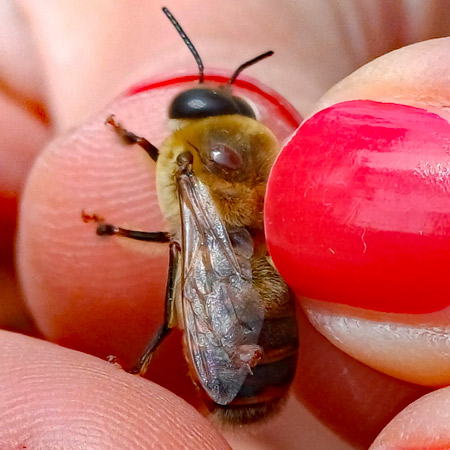
Varroa mites on a honey bee, found in a Kenya Top Bar Hive in the Australian Capital Territory.
From Bilpin to Canberra
In referencing Darwinian beekeeping, it is worth noting that Charles Darwin himself visited Sydney in early 1836. While there he travelled over the Blue Mountains, and would have ridden not too far away from Bilpen as it was named then.
The impact of pollinator loss extends beyond commercial orchards. In Canberra, honey bees also operate across backyards, community gardens and other horticultural areas. Native bees and other pollinators are all essential.
What can we do as individuals?
There are practical, positive steps we can all take at a local level:
- Plant for pollinators (both native and honey bees)
- Support local farmers’ markets and other direct-to-consumer growers
- Join ACT for Bees and Pollinators or your local beekeeping association
- Join the conversation on the ACT for Bees and Other Pollinators Facebook page.
- Deplore the use of pesticides and other environmental poisons
- Advocate for pollinator-friendly policies (realise that convenience food has a huge cost to the environment)
- Keep learning and sharing knowledge.

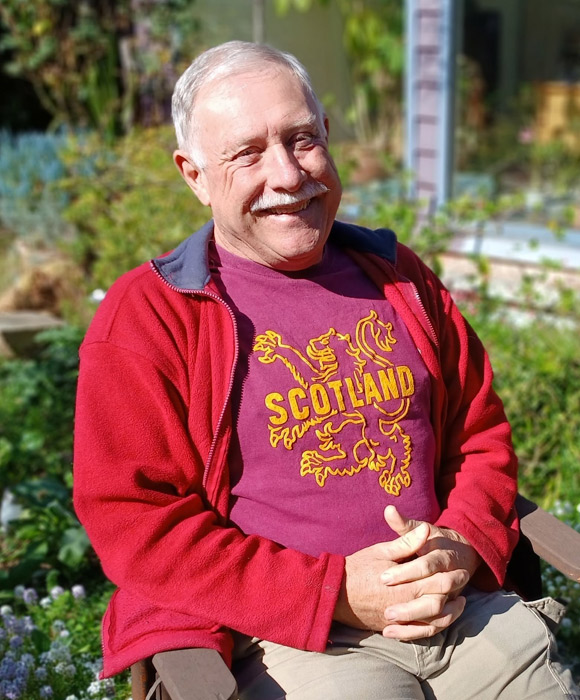
Mark Paterson
Optimist
Vice President - ACT for Bees and Other Pollinators
President - Canberra Region Beekeepers Association
Photo credits:
Header image: ABC News
Varroa mite on honeybee: Mark Paterson
Mark Paterson portrait: Liz Fraser, ACT for Bees volunteer.