

Connecting children to nature through native bee hotels
July 16, 2026
Varroa mites, bees, and our future food system: A reckoning and a road ahead
August 5, 2026
This week, to celebrate Moth Week, my 5 year old grandson and I turned my backyard into a tiny field station to see who might visit after dark. A white sheet, a bright light and a smartphone were all we needed.
We clipped the sheet to the clothesline, switched on the light and waited.
At first, nothing happened.
Then... nothing still happened.
We waited a little longer. The winter night was beautiful, but our white sheet remained stubbornly empty. We'd unknowingly chosen one of Canberra's coldest weeks to go moth hunting. Not every nature adventure ends with an exciting discovery. Sometimes it begins with learning a little patience.
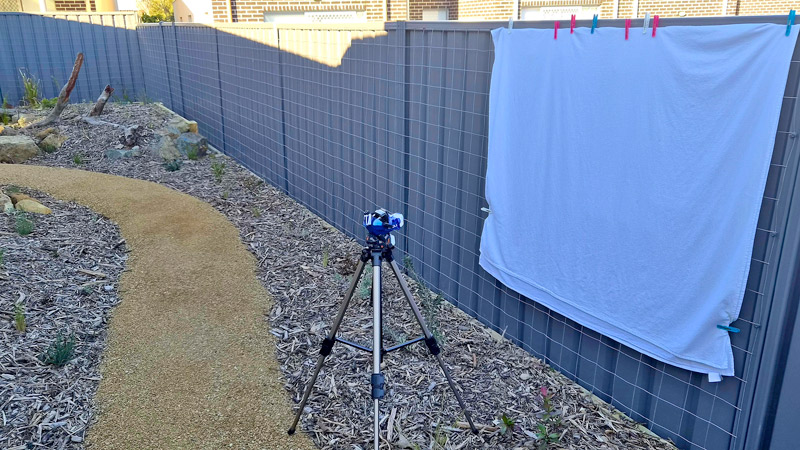
The original set up in our back yard.
While Moth Week falls in July, Canberra's peak moth season is actually spring and summer. On a warm spring or early summer evening, this same experiment might attract dozens of different insects.
So why go looking for moths in the first place?
Did you know Australia is home to more than 22,000 species of moths (Order Lepidoptera)? Surprisingly, only about half have been formally named by scientists, meaning thousands more are still waiting to be described.
The name Lepidoptera comes from the Ancient Greek words 'lepis' (scale) and 'pteron' (wing). Their wings are covered with tiny overlapping scales that create the beautiful patterns and colours we see while also providing insulation and protection.
Many Australian native plants are visited by both day- and night-active pollinators. Planting a diversity of locally native flowering species helps support insects around the clock. According to the Australian National Botanic Gardens, moth-pollinated flowers are often pale in colour, open at night, have a strong scent that may increase at night and have an open cup or tubular shape.
Some natives suitable for the Canberra region that are attractive to moths include:
- Native Tobacco (Nicotiana suaveolens) – Elegant white trumpet-shaped flowers release a sweet perfume after sunset, making this one of Australia's best examples of a plant adapted for moth pollination. Native to the Canberra region, it flowers generously and is easy to grow from seed.
- Grevilleas - Grevilleas are famous for attracting honeyeaters during the day, but their nectar also provides food for moths after dark. With hundreds of species available, there's a grevillea for almost every Canberra garden.
- Melaleucas - Often covered in fluffy cream or white blossoms, melaleucas provide nectar for a remarkable diversity of insects. While bees are busy during the day, moths are among the many visitors that continue feeding after sunset.
- Sweet Bursaria (Bursaria spinosa) – In summer, Sweet Bursaria is smothered in masses of tiny white flowers with a sweet honey fragrance that drifts through the evening air. It's one of the best shrubs you can plant for supporting a wide variety of insects and is also an important food plant for butterfly caterpillars.
- Local wattles – Wattles are more than a splash of golden colour in spring. Their leaves provide food for the caterpillars of many native moths. By planting local wattles, you're supporting the next generation of moths long before they take flight.
Like bees, moths visit flowers in search of nectar. As they feed, pollen sticks to the tiny scales and hairs covering their bodies and is carried to the next flower they visit. Because many moths are active after sunset, they help pollination continue long after daytime pollinators have finished for the day.
But adult moths are only one chapter of the story. Their caterpillars are an essential food source for birds, reptiles and small mammals, supporting entire food webs. Many species also depend on particular native plants to complete their life cycle.
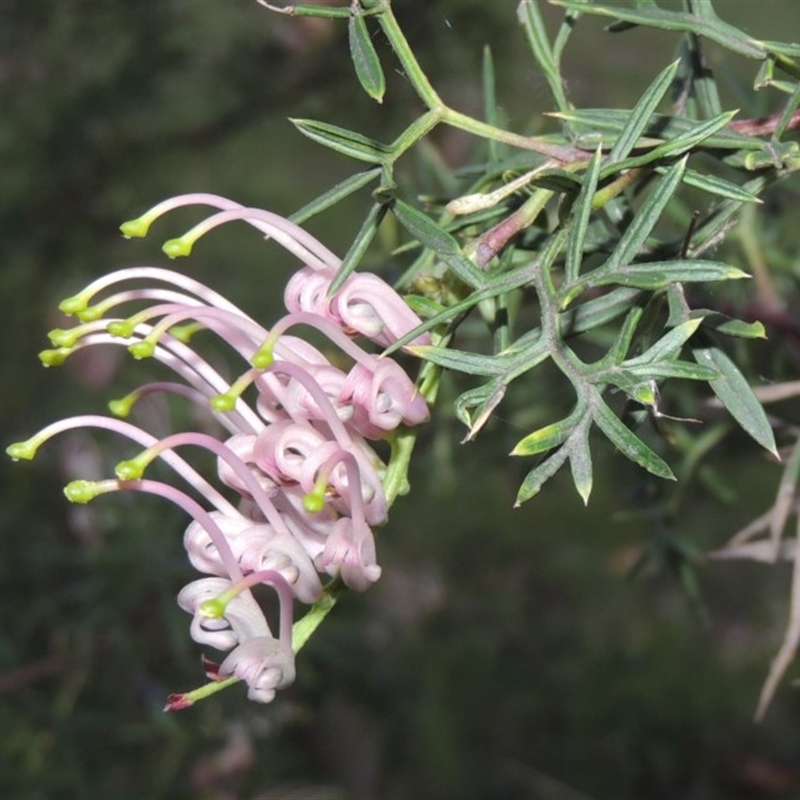
Grevillea. Image from NatureMapr
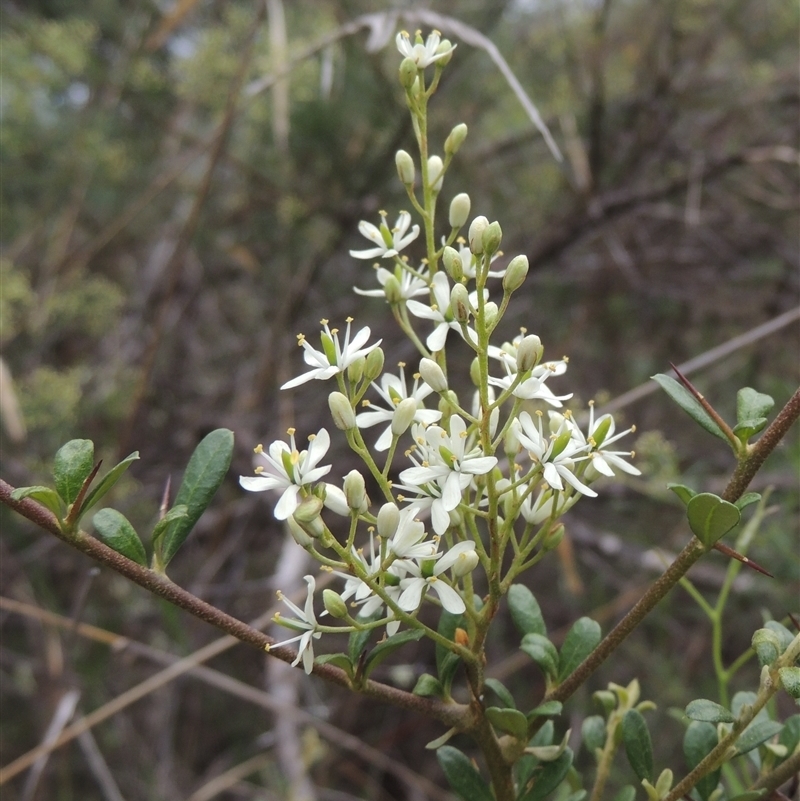
Sweet bursaria. Image from NatureMapr.
Did you know?
Some moths have tongues (proboscises) longer than their bodies, allowing them to reach nectar hidden deep inside tubular flowers. Some adult moths (such as the Golden Sun Moth, listed as Vulnerable on the ACT Threatened Species Register) never eat at all, relying entirely on the energy they stored as caterpillars.
Looking after pollinators isn't just about bees. It's about appreciating the countless insects—both day and night—that quietly keep our ecosystems healthy.
Despite waiting patiently, our white sheet remained empty. At first we were disappointed, but we soon realised that was part of the lesson. Nature doesn't perform on cue—it follows its own timetable. Just as birdwatchers don't expect every walk to produce a Superb Lyrebird or Painted Honeyeater, a quiet night doesn't mean the experiment failed. In citizen science, every observation matters, even when the observation is that nothing appeared. That knowledge is just as valuable for understanding how wildlife responds to the seasons and weather.
Looking back, there were probably several reasons our experiment was so quiet. We'd chosen one of the coldest nights of the year, and my own garden is still very young. Like many gardens in newer suburbs, it hasn't yet developed the layers of mature vegetation that support a rich variety of insects. Creating habitat is a long-term investment, and every tree, shrub and flowering plant we add helps make our gardens more welcoming over time.
We weren't quite ready to give up though! The following evening we packed up our white sheet and headed to a nearby nature reserve to try again. Once again, the moths proved elusive, but nature still had a surprise waiting for us. The insects we found weren't moths at all—they were parasitoid wasps.
Although they're rarely noticed, parasitoid wasps are among nature's most important pest controllers. Their larvae develop on or inside other insects, helping keep populations in balance, while many adults visit flowers for nectar and can also contribute to pollination. They're a reminder that even the smallest creatures play an important role in healthy ecosystems.
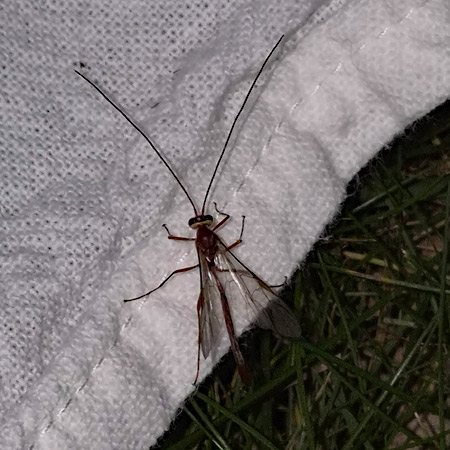
One of the parasitoid wasps we discovered.
You don't need to be an entomologist to make a valuable contribution to science—curiosity is enough. Why not try the white sheet experiment yourself this spring when the weather warms? You may not always find moths, but you might discover something even more unexpected.
-
Choose a calm, dry, mild evening. Overcast and humid evenings, or nights following rain can be particularly good.
-
Hang a white sheet outside after sunset. If possible, position the sheet near native vegetation rather than in the middle of a lawn.
-
Shine a bright light onto the sheet but avoid pointing lights directly into neighbouring properties. Use a bright white LED or UV light (if you have one), although an ordinary outdoor LED or bright torch can still attract insects.
-
Wait quietly for at least 30–60 minutes. New arrivals often appear throughout the evening.
-
While you’re waiting, try checking around outdoor lights like the porch, garage or public space lighting. Even on chilly nights, moths may gather there.
-
Photograph any visitors.
-
Upload your observations to NatureMapr. This helps build a clear picture of local wildlife, helping experts protect nature and track environmental changes. Don’t worry if you’re not sure of the species. An expert will check your entry, and you’ll get an email when they confirm or correct your log.
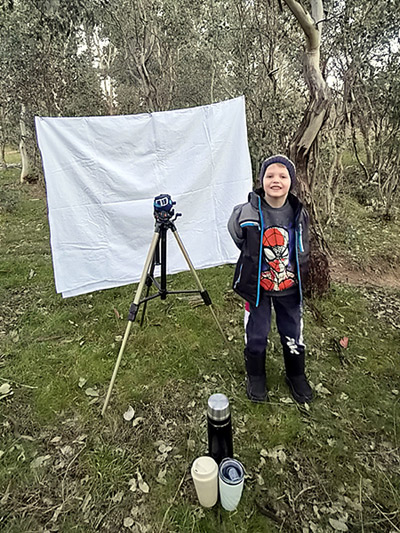
Our set up in the nature reserve.
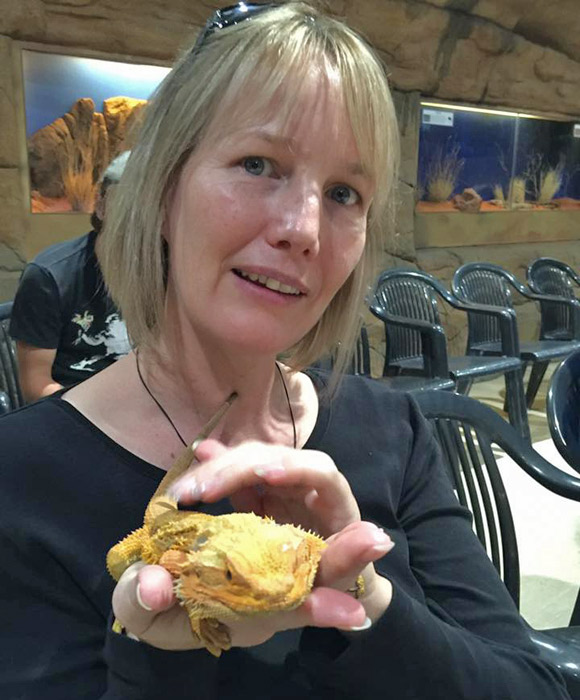
If I'm honest, this little experiment may have created a monster! Our first lighting setup was enough to get us started, but I've already found myself researching better lights, different sheet arrangements and the best times of year to try again. It seems moths have already captured my imagination—even if they haven't yet landed on my white sheet.
We'll be back out on a warmer spring evening, and look forward to sharing whatever we discover. After all, that's the joy of citizen science: you don't always find what you were looking for, but you almost always come home having learned something new.
Have you tried the 'white sheet experiment'? We'd love you to share your discoveries by tagging ACT for Bees on Facebook or Instagram.
Nikki McPhan
ACT for Bees and Other Pollinators volunteer
Learn more about moths (and wasps!)
- Australian Moths Online - CSIRO
- Moths, butterflies and skippers: Order Lepidoptera – Australian Museum
- Moths in the A.C.T. – a book by Glenn Cocking, Suzi Bond and Ted Edwards, supported by the CSIRO
- Moth Tracker - SWIFFT - help the conservation of Endangered Bogong Moths and Critically Endangered Mountain Pygmy-possums
- Moth Week
- Ichneumonid Wasps – Australian Museum
- Lepidoptera sightings in the ACT - NatureMapr
- Pollination by nocturnal Lepidoptera, and the effects of light pollution: a review - Callum J. Macgregor, Michael J. O. Pocock, Richard Fox, Darren M. Evans
- Order Lepidoptera - Atlas of Living Australia
- Pollination – Teachers’ notes – Australian National Botanic Gardens (PDF)
- Shining a light on moths - CSIRO
- What do wasps do?
- What’s the difference between moths and butterflies? – The Conversation