Bee and Pollinator Friendly ACT
Our vision
Our vision is for the ACT to become a Bee and Pollinator Friendly Territory, where pollinators are considered in how we plan, plant, manage and care for our urban and natural landscapes.
Healthy pollinator populations contribute to biodiversity, resilient ecosystems, climate resilience and food production. The ACT has an opportunity to demonstrate how government, community organisations, researchers, educators, industry and residents can work together to create a more pollinator-friendly city and region.
A Bee and Pollinator Friendly ACT is about more than individual gardens. It is about creating landscapes, policies and practices that support pollinators across our suburbs, parks, reserves, farms, schools, workplaces and public spaces.
Why pollinators matter
Pollinators in the ACT include native bees, honey bees, butterflies, moths, flies, beetles, wasps and birds. Together they play an essential role in the reproduction of many flowering plants and contribute to the health and resilience of ecosystems.
Pollination is not only a biodiversity issue. It is also an essential ecological service supporting local food production, food security and resilient food systems. Many fruits, vegetables, nuts, seeds and livestock fodder crops depend on animal pollination to varying degrees.
Pollinator declines are a global concern, driven by habitat loss, fragmentation, pesticide use, invasive species, disease and climate change.
The ACT is uniquely placed to take action. We already have strong environmental programs, active community groups, citizen science initiatives, research expertise and growing recognition of the importance of biodiversity in urban planning.

The ACT is home to a remarkable diversity of native bees, many of which are important pollinators of native plants and gardens. Creating a Bee and Pollinator Friendly ACT means supporting the needs of both native and introduced pollinators through habitat, nesting opportunities and diverse flowering plants.
What does a Bee and Pollinator Friendly ACT look like?
A Bee and Pollinator Friendly ACT considers pollinators in the way we design, manage and connect our landscapes.
Habitat
Pollinators need food, shelter, nesting sites and water.
A Bee and Pollinator Friendly ACT would:
- Increase diverse flowering plants that provide pollen and nectar throughout the year.
- Create connected pollinator corridors and stepping-stone habitats across Canberra.
- Increase nesting opportunities for native bees and other pollinators.
- Encourage pollinator-friendly gardens in homes, schools, community gardens and workplaces.
- Incorporate pollinator habitat into revegetation and restoration projects.
- Support year-round forage and habitat around community gardens, orchards and other productive landscapes to strengthen both pollination and biodiversity.
The goal is a connected network of high-quality pollinator habitat across the ACT.

Planning
Pollinators should not be an afterthought.
A Bee and Pollinator Friendly ACT would:
- Embed pollinator-friendly principles into ACT planning and landscape guidelines.
- Consider pollinator habitat in new suburbs and developments from the design stage.
- Encourage pollinator-friendly planting in parks, streetscapes, verges and public spaces.
- Identify opportunities to connect green spaces through pollinator corridors.
- Adopt a strategic mowing approach incorporating reduced-mow areas and pollinator-friendly understorey plantings where recreation, access, safety and fire-management requirements allow.
- Encourage multifunctional landscapes, such as rain gardens and other nature-based solutions, that support pollinators while improving water management, habitat connectivity and urban cooling.
- Support demonstration projects that showcase practical pollinator-friendly approaches in public landscapes, schools, community gardens, urban developments and other community settings.
- Provide practical guidance for planners, landscape architects, developers and land managers.
The goal is for pollinator habitat to become a normal part of urban and landscape planning rather than an optional addition.
The Ginninderry pollinator corridor project demonstrates how connected habitat can be incorporated into urban development to support pollinators and provide year-round floral resources.
Pesticides
Reducing risks to pollinators is an important part of creating pollinator-friendly landscapes.
A Bee and Pollinator Friendly ACT would:
- Encourage integrated pest management approaches.
- Reduce unnecessary pesticide use.
- Avoid spraying flowering plants when pollinators are actively foraging wherever practicable.
- Promote pollinator-safe practices for land managers, contractors and residents.
- Explore opportunities to reduce the use of products known to pose significant risks to pollinators.
The goal is to minimise avoidable chemical exposure and make pollinator health a consideration in land-management decisions.
Education

Creating lasting change requires community understanding and participation.
A Bee and Pollinator Friendly ACT would:
- Support pollinator and biodiversity education in schools and early childhood settings.
- Encourage practical activities such as pollinator gardens and habitat projects.
- Provide accessible information about native and introduced pollinators.
- Promote pollinator-friendly gardening and land management practices.
- Build community awareness of the role pollinators play in healthy ecosystems and food production.
The goal is to build ACT residents’ understanding of pollinators, why they matter, and practical ways they can help.
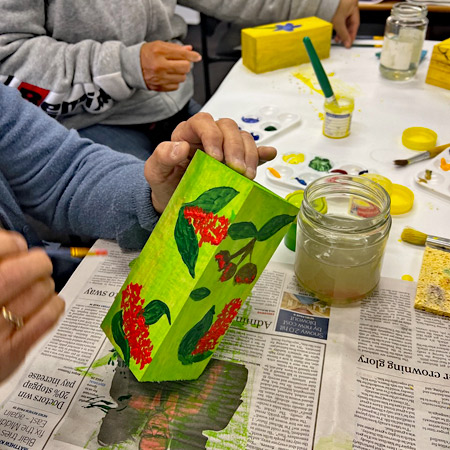
ACT for Bees and Other Pollinators has partnered with Cool.org to develop curriculum-aligned Love Food? Love Bees! educational resources for early childhood, primary and secondary students. These resources help young people understand the role of pollinators in ecosystems and food production and provide practical ways to take action.
Monitoring and citizen science
Understanding our pollinators helps guide future action.
A Bee and Pollinator Friendly ACT would:
- Improve knowledge of pollinator diversity and distribution.
- Support citizen science and community monitoring projects.
- Partner with researchers, naturalists and environmental organisations.
- Encourage schools and community groups to participate in monitoring activities.
- Develop indicators that allow progress to be measured over time.
The goal is for decisions and future actions to be informed by evidence, with measurable progress towards healthier pollinator populations.
A Bee and Pollinator Friendly ACT should be guided by evidence. Citizen science initiatives such as Canberra Nature Map enable residents to contribute biodiversity observations that help build knowledge of pollinator diversity and distribution across the Territory. Combined with government and university research, these programs provide a foundation for tracking change over time and measuring progress towards a more pollinator-friendly landscape.
Partnerships
Creating a Bee and Pollinator Friendly ACT requires collaboration across government, research, education, industry and the community.
ACT Government, Traditional Custodians, researchers, educators, Canberra Nature Map, environmental organisations, Landcare groups, community gardens, beekeepers, landscape architects, developers, growers, businesses, schools and residents all have a role to play.
ACT for Bees and Other Pollinators works with a wide range of partners to support pollinator-friendly outcomes across the Territory. This includes contributing to the development of the Australian Pollination Strategy being led by the Wheen Bee Foundation, helping ensure local knowledge and practical experience inform national efforts to strengthen pollination security and support pollinators across agriculture and natural ecosystems.
Building on existing ACT initiatives
The ACT already has many programs and initiatives that contribute to biodiversity, habitat protection and environmental stewardship.
These include:
- The ACT Government's Canberra Region Local Food Strategy 2024–2029 supports a sustainable, resilient and locally connected food system. By recognising the importance of healthy ecosystems, biodiversity and sustainable food production, the Strategy complements the vision of a Bee and Pollinator Friendly ACT.
- The ACT's Biodiversity Sensitive Urban Design Guide encourages development that works in harmony with the natural environment by maintaining and enhancing nature, improving habitat connectivity, minimising threats to biodiversity and connecting people with nature. These principles align closely with the vision of a Bee and Pollinator Friendly ACT.
- The ACT Government’s Living Infrastructure Plan, which recognises that a growing city must continue to protect and enhance biodiversity, habitat connectivity and ecosystem services. Many of the principles underpinning the Plan—including greener neighbourhoods, connected landscapes and healthier urban ecosystems—also support the goals of a Bee and Pollinator Friendly ACT.
- The ACT Government's Urban Forest Strategy guides the protection and growth of Canberra's urban forest, recognising the importance of tree canopy, habitat connectivity, biodiversity and climate resilience in a growing city
- Through the Nature in the City: Cooling Your Suburb grants program, the ACT Government has supported projects such as microforests, demonstration gardens and other nature-based initiatives that create greener, more connected urban environments.
- The ACT already has strong foundations for monitoring biodiversity through government research programs and citizen science initiatives. Together, these programs help build knowledge about the Territory's plants, animals and ecosystems, while enabling community members to contribute directly to environmental monitoring and conservation.
- Pollinator-friendly planting is already being supported through a range of ACT initiatives. The Urban Planting Calendar, developed by ACT for Bees and Other Pollinators and the ACT Government, which promotes year-round food and habitat resources for pollinators.
- Community Garden Grants, demonstration precincts in new suburbs, and projects such as the Gawari Mada micro-forest in Holt show how pollinator-friendly planting can be incorporated into community spaces, public landscapes and new developments.
- The Ginninderry pollinator corridor incorporates pollinator planting into the planning and design of new suburbs, using year-round flowering plantings in 200-metre grids to improve habitat connectivity and support native bees and other pollinators across the landscape.
A Bee and Pollinator Friendly ACT builds on these existing foundations and seeks to strengthen the consideration of pollinators across planning, policy, education and land management. Existing initiatives and future demonstration projects can help test new ideas, share lessons learned and showcase practical approaches that support pollinators while delivering broader community and environmental benefits.
Learning from elsewhere
Many communities around Australia and overseas are working towards becoming more pollinator friendly.
Australian examples include initiatives in Melbourne, Sydney, Brisbane, and Northern NSW.
International examples include:
- Bee City USA, which provides a framework for communities to support pollinators through habitat creation, reduced pesticide use, education, policy integration and annual reporting.
- Bee City Canada, which supports municipalities committed to pollinator conservation.
- For the Love of Bees in New Zealand, a community-led initiative focused on urban ecological restoration.
- B-Lines in the United Kingdom, which is creating networks of flower-rich habitat to reconnect landscapes for pollinators and other insects.
- All-Ireland Pollinator Plan, which demonstrates how coordinated action across government, communities, businesses and land managers can create connected habitats and measurable outcomes for pollinator conservation.
These initiatives demonstrate that meaningful progress is possible when communities, governments and organisations work together around a shared vision.
Canberra is already creating pollinator-friendly places
Across Canberra, businesses and landscape designers are demonstrating how gardens, commercial spaces and community places can contribute to a greener, more connected urban landscape. These projects show that pollinator-friendly design can be integrated into the places where people live, work, eat and gather.
- Whitlam Heartbeat Café and Landscape Space incorporates climate-wise demonstration gardens, edible planting and hardy native pollinator plants wherever possible. It shows how a community and commercial precinct can combine everyday use with opportunities for nature.
- The Suburban Land Agency’s Climate-Wise Demonstration Garden showcases how climate-resilient planting can support pollinators and local wildlife, with plant signage highlighting flowering times and the pollinators attracted to different species.
- Bluebell Horticulture Studio promotes pollinator and habitat gardens for schools, community organisations and private clients, helping bring pollinator-friendly planting into a range of settings.
- Naturescapes Canberra creates naturalistic, biodiverse gardens that reconnect wildlife communities, support local habitat and build resilience to a changing climate.
- Two Before Ten Aranda has transformed a long-vacant site into a community hub incorporating an urban farm, fruit trees, a native garden and beehives. It demonstrates how productive urban spaces can incorporate nature alongside food production and community life.
These examples illustrate what is possible when nature is considered as part of the design of our urban environment. The next step is to help connect these individual efforts into a wider network of flowering plants and habitat, so that pollinators have the food, shelter and pathways they need to move through the city.
What success could look like
A Bee and Pollinator Friendly ACT would have:
- more diverse flowering habitat throughout urban and rural landscapes.
- better connected green spaces and pollinator corridors.
- increased nesting habitat for native bees and other pollinators.
- reduced reliance on unnecessary pesticide use.
- greater community awareness and participation.
- strong partnerships across government, industry, research and the community.
- better information about pollinator populations and trends.
- planning and land management practices that routinely consider pollinators.
Success would be measured not only by the number of plants established or projects completed, but by the long-term health and resilience of pollinator populations and the ecosystems they support. Potential indicators could include:
- hectares of pollinator-friendly habitat established or restored
- kilometres of connected habitat corridors
- participation in citizen science programs
- pollinator observations recorded through monitoring programs
- uptake of pollinator-friendly planting practices.
From vision to action
The ACT already has many of the ingredients needed: community commitment, research expertise, environmental organisations, citizen scientists, educators and government initiatives that support biodiversity.
The opportunity now is to connect these strengths through a shared vision and coordinated action, ensuring pollinators are considered in how we plan, plant, manage and care for our landscapes now and into the future.
ACT for Bees and Other Pollinators advocates for greater consideration of pollinators in planning, landscape design, habitat creation, education and land management across the Territory. We are encouraged by the growing recognition of the role pollinators play in healthy ecosystems and resilient urban environments.
By working constructively with government, researchers, industry and the community, we hope to help advance a shared vision for a Bee and Pollinator Friendly ACT.
What happens next?
In October 2026, ACT for Bees and Other Pollinators met with Suzanne Orr MLA, ACT Minister for Climate Change, Environment, Energy and Water and Dr Gwyneth Leigh, ACT Government Landscape Architect, to discuss opportunities to strengthen pollinator outcomes across the Territory. The discussion highlighted strong alignment between the Bee and Pollinator Friendly ACT vision and existing ACT Government priorities relating to food security, biodiversity, living infrastructure, urban greening and habitat connectivity.
The next step is to continue working with government, researchers, industry and community partners to identify practical actions, partnerships and demonstration projects that support pollinators through planning, landscaping, habitat creation, education, citizen science and local food systems. By building on existing ACT initiatives and aligning with the emerging Australian Pollination Strategy, a Bee and Pollinator Friendly ACT can help guide coordinated action to support pollinators across the Territory.