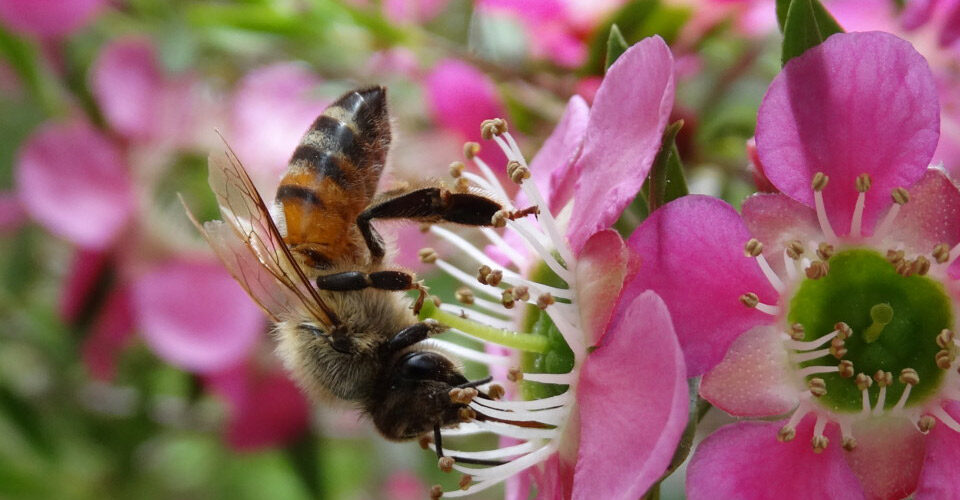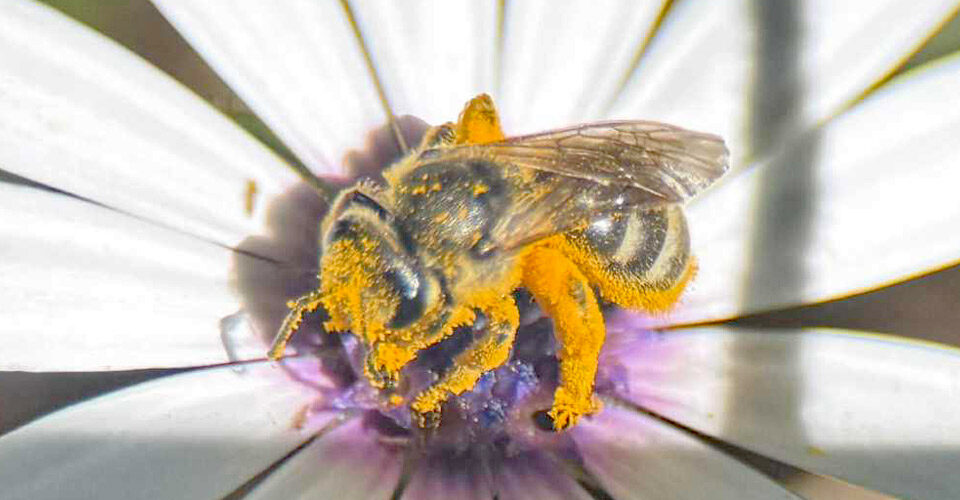
Bee swarm season is coming – one of nature’s most remarkable spectacles
August 12, 2026
Highlights from the 2026 Australian Native Bee Association Conference
August 25, 2026
Out our back door, the French lavender is strangely silent. There are no bees, even when the winter sun makes a welcome appearance. On social media, similar reports drift in: dead bees and empty hives, flowers in bloom, but no bees.
Next to the lavender, the hive on the back deck just ain’t buzzing.
So, where are the honeybees?
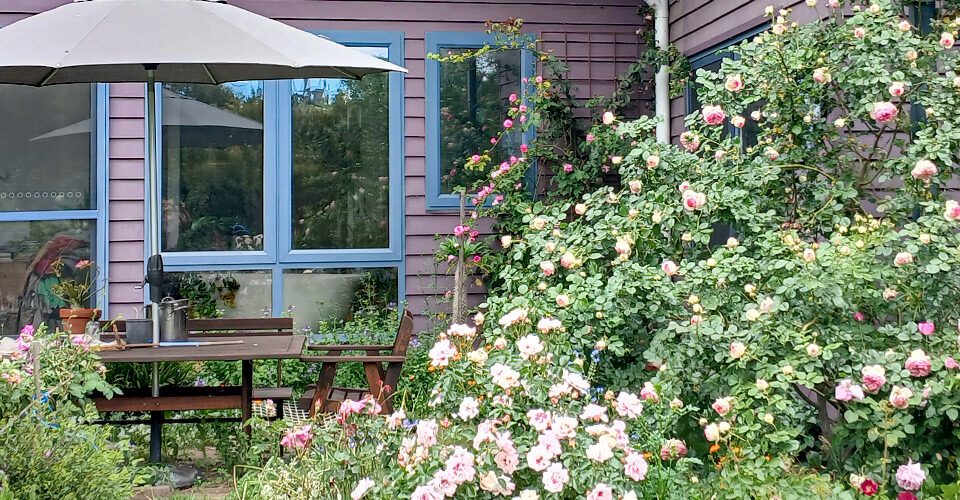
At home, I am the Chief Gardener as well as the First Assistant Beekeeper, adept at passing the hive tool to my partner, The Beek. Years ago, when he took up keeping honeybees, the first thing I did was wander around our garden and neighbourhood making a list of what was flowering each month. Since then, I’ve taken an interest in all things pollination. I can wield a smoker, although I lack the skills to manage the hives.
Once the varroa mite landed in Australia, it was just a matter of time before the wave of destruction hit Canberra. Despite varroa’s appearance over a year ago, Canberra beeks reported a great summer season with vigorous hive activity and booming honey harvests. But the monthly bee club meetings kept coming back to these basics: check your hives, monitor, treat as appropriate, because varroa is on the rampage.
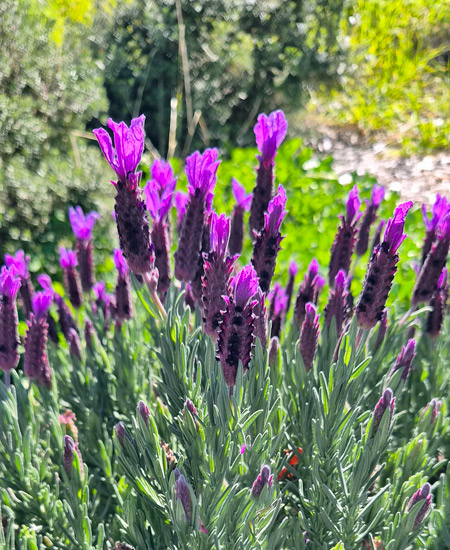
The lavender is in flower - but where are the honeybees?
Might a solution be in my backyard?
As members of ACT for Bees and Other Pollinators, our ecological values align with natural beekeeping and pest management methods, meaning interventions with minimal impact on bees. I was vaguely aware that various common garden herbs were said to benefit bee health. So when social media tossed me a video about common stinging nettle (Urtica dioica) for varroa control, I was onto it. Afterall, every year nettles appear in some neglected corners of my garden.
Yes, stinging nettles are a nasty weed that most of us sensibly steer clear of, or cautiously yank out whilst wearing the horticultural equivalent of Personal Protective Equipment rather than risk burning red welts on exposed skin.
In years past, I’ve let them flourish because they are the food plant for Admiral butterfly caterpillars, one of those Other Pollinators that’s welcome in our home ecosystem. I’ve used nettles to make weed tea, a tonic for treasured plants. You can use them as a green manure or to accelerate compost. Chuck them into soup as a highly nutritious pot herb. Nettle tea might soothe your arthritic aches and pains as well as your soul while you contemplate the plight of pollinators.
Intrigued, I looked up the study referenced in the video.
Let's try this at home!
In a well-designed experiment from 2025, Egyptian scientists compared varroa treatments such as an alcohol extract of nettles, smoke from dried nettles, and the industry standard formic acid with a no-treatment control condition1. Their results demonstrated that nettle extract and nettle smoke performed favourably compared to industry standard formic acid, and for bonus points, produced less honeybee stress and mortality.
“Let’s try this at home!” said I.
Problem was, it was the wrong time of year, and our nettles were tiny seedlings.
Meanwhile, The Beek did what beekeepers must, then 2 of his 3 hives croaked, as have countless others in the Canberra region.
With a little more googling, I learned that nettles contain an impressive pharmacopoeia of bioactive compounds in their leaves and roots, all contributing to the long list of traditional medicinal uses for humans, animals and horticulture2. Around the world, the insecticidal, fungicidal and acaricidal properties of nettles are used as part of a sustainable agricultural Integrated Pest Management approach. (Acaricide is the fancy term for something that kills mites, such as varroa.)
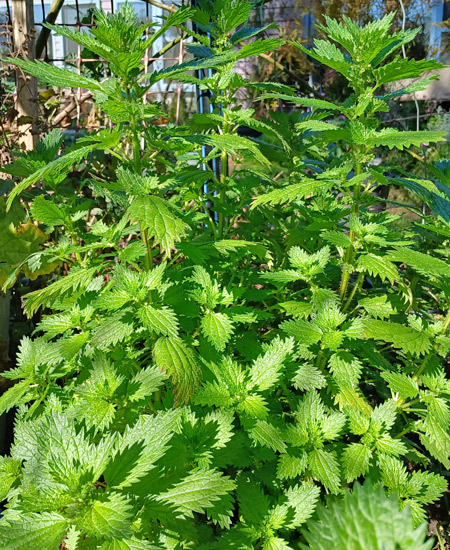
Common stinging nettle in Liz's garden.
As Chief Gardener, I’ve brought new enthusiasm to nettle cultivation, and foresee many more uses for the nettles now flourishing our untidy but biodiverse yard.
In short, whether you keep bees or not, there are plenty of reasons to let nettles take over a bit of your garden. Give them to your beekeeping friend or neighbour, and you might just score a jar of honey.
Home science
The evidence for nettles for varroa remains limited to anecdotes and one formal study. One anecdote suggests throwing fresh nettles on top of a hive’s frame and letting the bees do the work. Dried nettles in the smoker appeals to the KISS principle, while the low cost of DIY nettles is appealing compared to commercial miticides.
Let’s not dismiss anecdotes, which are often the impetus for further research. This is a field in dire need.
Other plants such as oregano, peppermint, sage and manuka contain beneficial bioactive compounds that with further research may find their way onto the menu of options for varroa control3. Some of these plants may already be thriving in your pollinator-friendly garden. Meanwhile, thymol, the essential oil of thyme, is sold as Apiguard.

Nettles or not, monitoring mite levels in hives remains foundational to excellent beekeeping practices. For the rest of us, perhaps the takeaway is simpler: pay attention to what's growing in your garden. Plants we dismiss as weeds may be feeding caterpillars, supporting pollinators, improving soil health, or providing unexpected benefits to people and wildlife alike. Curiosity is often where good science begins, so keep observing, keep learning, and keep sharing what you discover.
Oh, and do use gloves when grasping those nettles!
Liz Fraser
Chief home gardener, Assistant Beek, ACT for Bees and Other Pollinators volunteer
Sources
- Sakla RS, El-Gendy RM, Ali J, Hafez MMA (2025). Stinging nettle (Urtica dioica) as a potential control agent for Varroa mite (Varroa destructor) in honeybee colonies (Apis mellifera).
- Bhusal KK, Magar SK, Thapa R, Lamsal A, Bhandari S, Maharjan R, et al (2022). Nutritional and pharmacological importance of stinging nettle (Urtica dioica L.): A review.
- Korený Ľ, Hillayová MK, Škvarenina J (2025). Efficacy of plant-based remedies for Varroa destructor control in honey bee colonies: A preliminary study.