
Autumn Abundance: Bees, Blooms & Community Action
April 28, 2026We’re very much looking forward to the World Bee Day celebrations at the Capital Region Farmers Market on 16th May, ACT for Bees + members will be present with their stall and will love to say hello. Local radio station ABC 666 will also be broadcasting live from the market with bee-related stories and guests. Come and collect a few seed bombs, small hardy balls made of clay, compost and seeds used to revegetate bare areas and learn how to make them. They protect seeds from wildlife and harsh weather, germinating when rain breaks down the clay for your garden.
Enjoy watching the children play ‘Being a bee and pollinating the apple trees’ as well as other children’s activities.
More information on related events is provided on the World Bee Day Australia website where you can find the events happening in your region.
Best wishes,
Julie, Micah, Mark, John, Charlie, Didi, Matt and Inga
The ACT for Bees + Other Pollinators team.
Why World Bee Day matters: Celebrating Pollinators at the Capital Region Farmers Market
Every year on 20 May the world acknowledges one of nature’s most important creatures: the honeybee. World Bee Day was established to raise awareness of the vital role bees and other pollinators play in keeping our ecosystems and food systems healthy. The people of Slovenia were instrumental in this because of the special place that honey bees have in the country’s history and culture. For us in Australia, It is a day to reflect, to educate, and to act on behalf of honey bees and other bees.
Bees are responsible for pollinating around a third of the world’s food supply, and approximately 80% of all flowering plant species. Without them, many of the fruits, vegetables, nuts and seeds we take for granted would simply disappear from our plates. Almonds are almost entirely dependent on bee pollination. So too are apples, cherries, blueberries, avocados and countless other foods. When bee populations decline, so does the quality, diversity and abundance of what we eat.
Healthy pollinator populations are also directly linked to food quality. Well-pollinated crops produce larger, more uniform fruit with better flavour, longer shelf life and higher nutritional value. For farmers and producers- bees are the foundation to production.
World Bee Day holds special meaning at the Capital Region Farmers Market. Our producers, from orchardists and almond growers to market gardeners, rely on healthy pollinator populations to bring quality food to your Saturday basket. Celebrating World Bee Day is our way of honouring that connection between nature, growers and community.So join us on Saturday 16 May 2026 as we celebrate World Bee Day amongst the very produce that relies on our amazing bees. The market will be hosting ABC Canberra Radio for a live broadcast, as well as traditional Slovenian Honey Breakfast (incorporating bread, apples and honey from our local producers). There’ll also be growers on hand to answer questions about the best bee-friendly plants for your garden, honey producers and exclusive honey themed food.
Saturday 16 May, 7am to 11.30am
Capital Region Farmers Market
Exhibition Park in Canberra
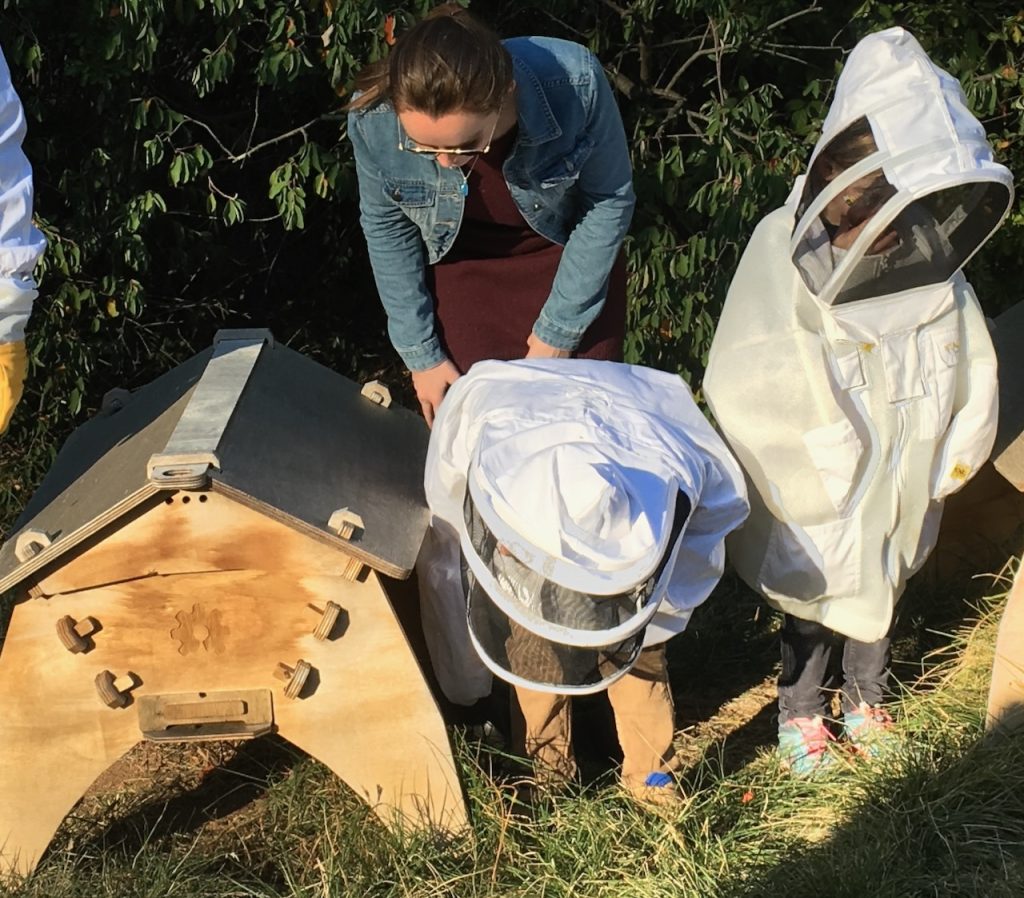
Enjoy some ACT for Bees World Bee Day memories
2018
Launching the inaugural World Bee Day celebration at the Embassy of the Republic of Slovenia 20 May 2018.
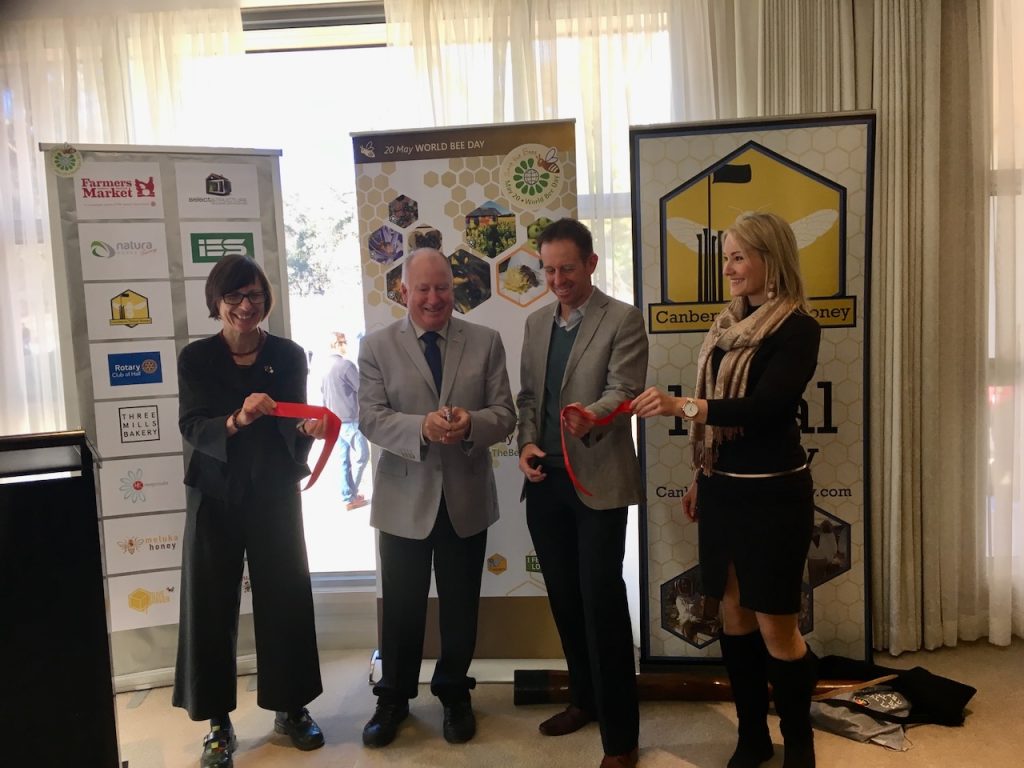
H.E. Helena Drnovsek Zorko the Ambassador of Slovenia, Mick Gentleman MLA, Shane Rattenbury MLA, Regina Bajc
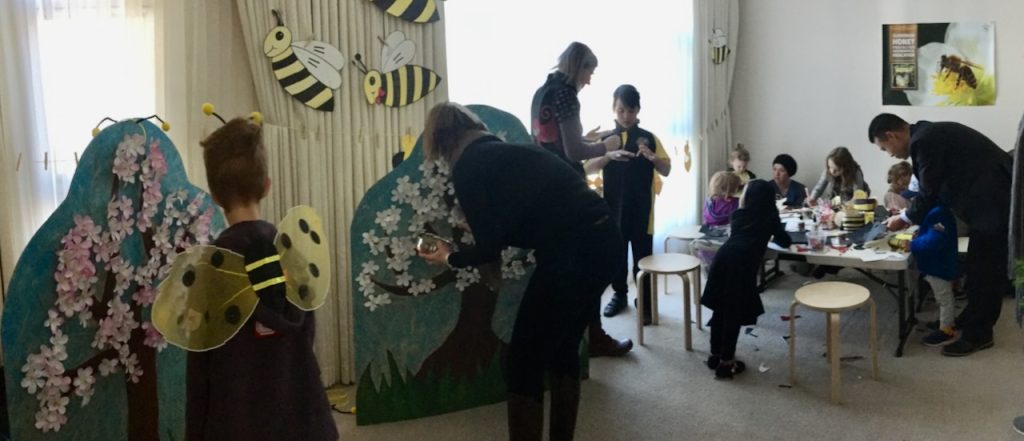
2019
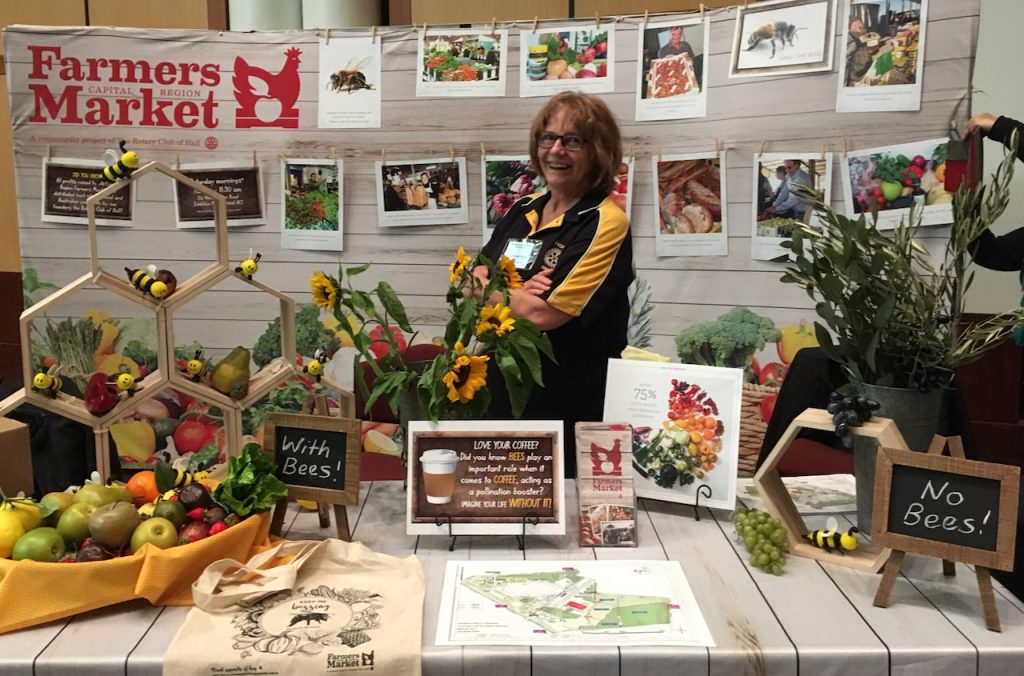


Celebrating 10 Years of Love Food? Love Bees! curricula

We’re proud to celebrate a decade of collaboration with the writers at Cool.org. In this time we have achieved:
- Creation of 23 curriculum lessons
- A total reach of 1.1 million young people
- Engagement with over 113,000+ students in the past year
These free, Australian-aligned resources are helping the next generation understand the vital role of pollinators in food systems and biodiversity.
Upcoming events
World Bee Day Celebrations
ACT for Bees stall
Saturday 16 May, 7am to 11.30am
Capital Region Farmers Market
Exhibition Park in Canberra (EPIC)
This year’s theme – “Bee Together for People and the Planet” – celebrates the partnership between people and pollinators in sustaining our food and eco-systems. Please come and say hello to us at the ACT for Bees stall at the World Bee Day celebration at the Capital Region Farmers Market at EPIC on Saturday May 16th. ABC radio will be broadcasting live from the market buzz.
World Bee Day Hive Tour
Saturday 23 May, 11am to 12pm
Australian Parliament House
Join volunteer beekeepers for an insider’s look at the Parliament House bee hives and the role bees play in supporting the landscape of Capital Hill. Book here.
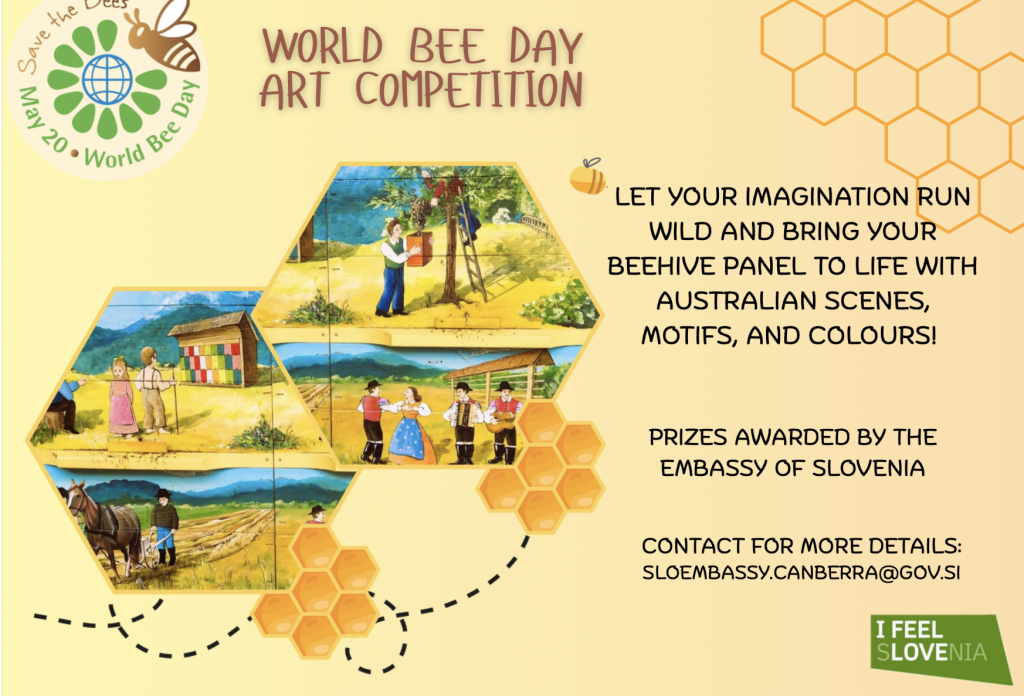
World Bee Day Art Competition
Schools, please join the World Bee Day Art Competition!
Closing date extended!
In Slovenia, there is a tradition of decorating the front entrances of honey bee hives with wooden panels with colourful and imaginative scenes. These paintings are not only beautiful – they also help bees find their way home!
Painted beehive panels are a unique part of Slovenian beekeeping and a special form of folk art. Traditional beehives show scenes from everyday life and religious/historical motifs from Slovenia.
With this art competition, we’d love to see scenes and motifs from the Australian landscape that you would decorate a bee hive with. Let your imagination run wild and bring your beehive panel to life with Australian animals, landscapes, and colours!
Instructions
- Get a piece of thick paper that is 40cm long x 20cm wide.
- Create your design. Let your imagination run wild! Coloured pencils or textas are fine.
- Complete the form and hand back to your teacher together with your artwork.
Name: ________________________________________________________
Year/class: ____________________________________________________
School: ________________________________________________________
Tell us about your design (optional): _________________________________________________________________
Interesting links
Protecting pollinating insects to improve diets and livelihoods
Most people don’t think about insects when they eat. But in farming systems like this one, the link is direct and stark. If pollinators decline, crop harvests decline. That can mean less food on the plate, fewer nutrients in people’s diets, and less income for the household.
In our new study, published in the journal Nature, we set out to trace that chain of connections directly: from pollinating insects to crops to human diets and livelihoods.
Working in ten smallholder farming villages in Jumla, our team recorded the diets of 776 women, men and children over a full year. We measured where key nutrients came from, and how this changed through the seasons. At the same time, we surveyed the insects visiting crops and analysed the pollen they carried, to identify which species were helping produce the foods people rely on. Learn more about how pollination affects the nutrition of our foods.
How to build cities for wildlife, not just people – new research
A new study published in the Conversation shows how changes in urban planning designs can boost biodiversity.
“In Christchurch, New Zealand, river habitats and wetlands were rebuilt after a major earthquake in 2011, guided in part by Māori knowledge of waterways and floodplains. In Vancouver, Canada, nature-based stormwater systems have been integrated into urban design through long-term collaboration with local First Nations.
Across the world, urban planning projects are beginning to take a different approach. One that designs with living freshwater systems, rather than trying to control and contain them.
In a new study, our international team of freshwater scientists and planning experts highlights that, while our towns and cities contain some of the world’s most degraded rivers, wetlands and ponds, they also provide huge opportunities for protecting and restoring freshwater wildlife.” Read more about this study in The Conversation.
Interesting books

Sister Nature: The diary of an optimistic beekeeper
By Jess De Boer
Kenyan beekeeper-turned-farmer Jess de Boer embarks upon a decade-long journey to find purpose and potential in the explosive world of regenerative agriculture.
From honey hunting in the last remaining pockets of rainforest in southern Ethiopia, to gardening in the depths of Kenya’s largest slum, Jess takes you to the arid lands of Northern Kenya where a group of pioneering farmers have begun to connect the people with the dust beneath their feet.
This is a journey into restorative action. Confronting the challenges of our stagnant education systems, unsustainable food production techniques and the growing disconnect of our youth, de Boer merges fact and science with hard-won wisdom in this inspiring and accessible tale of proactivity and hope.

Creature Corridors
By Billie Rooney
Discover how wildlife corridors can provide safe pathways for all sorts of creatures!
Creatures are on the move!
Wild animals often travel to find food, shelter or a place to breed. But this is becoming more difficult and dangerous, as construction and land clearing are affecting their habitat.
Creature Corridors follows kangaroos, koalas, birds, fish, crabs, cassowaries and lizards through wildlife corridors that exist across forests, rivers and seas. These corridors provide paths and spaces for them to move around safely. Discover how we can share our world with animals in this delightful and engaging story.
Reading level varies from child to child, but we recommend this book for ages 5 to 9.