
Buzzing Through Winter: Beekeeping Summit, Varroa News & Ginninderry Blooms
August 22, 2025
The 2026 Australian native bee calendar has landed!!!
January 10, 2026
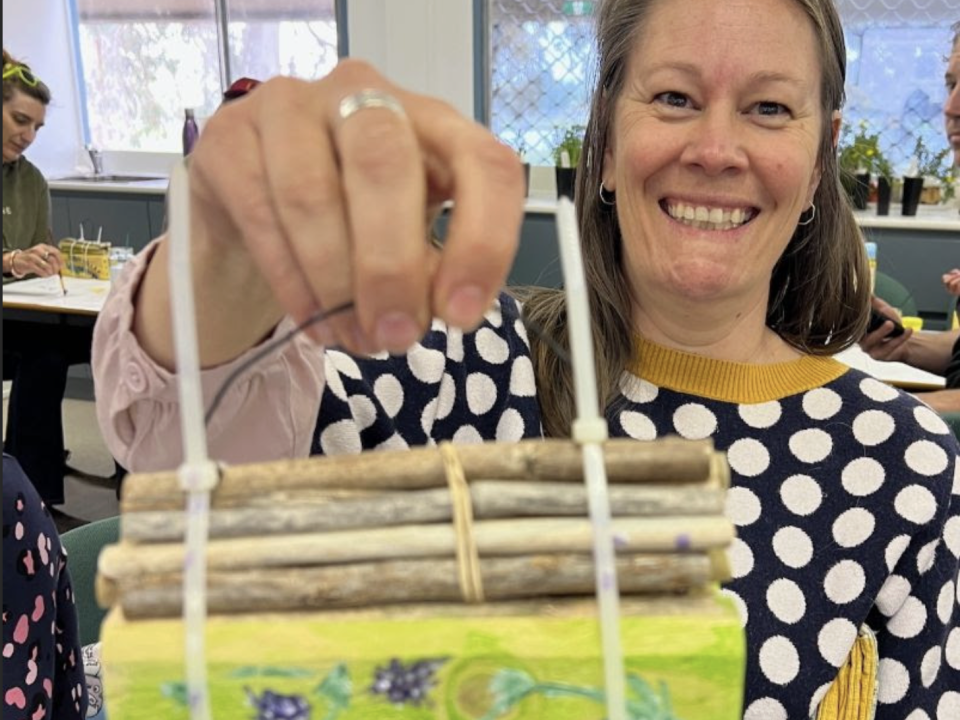
We are excited to share that we have received an ACT Government Environmental Grant 2025 to raise awareness of native bees through a series of bee hotel and nesting site workshops.
This grant will support hands-on workshops for children and youth, aligning with the ACT Government’s goal of becoming a Bee and Pollinator Friendly Territory. Our work responds to urgent threats to pollinators—climate change, habitat loss, and urbanisation—through practical, inclusive education.
By building and decorating pre-drilled bee hotels, students will:
· Learn the importance of providing habitat for native pollinators.
· Connect with nature in a meaningful way.
· Be encouraged to observe and record bee activity in their hotels.
Observation records will be submitted via NatureMapr, contributing to a growing community science database. This project will foster a sense of ownership, responsibility, and long-term engagement in environmental stewardship.
We are thrilled to collaborate with the Junior Ranger Program, Canberra City Farm, Molonglo Conservation Group, Ginninderra Catchment Group, and Majura Scouts to deliver this initiative.
This project is funded by the ACT Government through the Environmental Grants program 2025.


Ginninderry Inspire event
Our team was very, very busy, guiding the making of beautiful native bees from Banksia and prickly Casuarina cones with kids of all ages. We wound the cones with blue for the Blue banded and Cuckoo bees, orange for Resin bees and black for Lassioglossum bees. What fun the children had running around afterwards with their bees flying behind them!
The Native Bee Hotel/nesting site workshop was also well received with the attendees going home with a beautiful bee hotel and our ACT for Bees Planting guide to provide more food for the locals.

School visits
We’ve made a number of incursions into schools recently to perform our Spring play, where the Early Childhood students experienced the inter dependence of flowering plants,the bees and pollinators and birds (and biodiversity) by acting these roles with costumes and simple props.
Jon, one of our beekeeper members shared ‘The Beauty of Inside the Hive’ to preschoolers who also had a turn at being bees and pollinating the apple tree. We’re excited that schools we visit are keen to plant for bees and pollinators in their gardens and have food gardens for the students as well.

The Bee garden @ Floriade
At Floriade there is a section of garden beds down at the lakes edge showcasing the design flair of several of Canberra’s landscape designers. The theme this year is ‘Environment and science’.
Julie was approached by Michael McCormack of MM Landscape Design and Maintenance who was keen to incorporate bee hives (empty) in his ‘Bee garden’. Subsequently two hives are in place in that garden, a Warre hive (the white tower) and a cathedral hive (the horizontal brown one).
Vote for the bees! Vote for MM Designs in the People’s choice.
MAKE YOUR OWN NATIVE BEE HOTEL Workshop
Sunday 26th October 10.30am-12pm
Canberra City Farm
Learn about Australia’s amazing native bees and make a bee hotel for your garden
Bees and other pollinators need our help, and there’s so much we can do in our own backyards. We’re very excited to team up with the Canberra City Farm’s 10th Anniversary celebration to hold an Australian native bee workshop to learn more about the wonderful range of species we have in Canberra and the region.
Thanks to the generous support of the ACT Government 2025 Environmental grants program, this workshop is being offered to you free of charge.
Book HERE
UPCOMING EVENTS
From Hive to Habitat:How to Keep Bees & Feed Them Too @ Floriade
October 2 @ 11:30 am – 12:15 pm
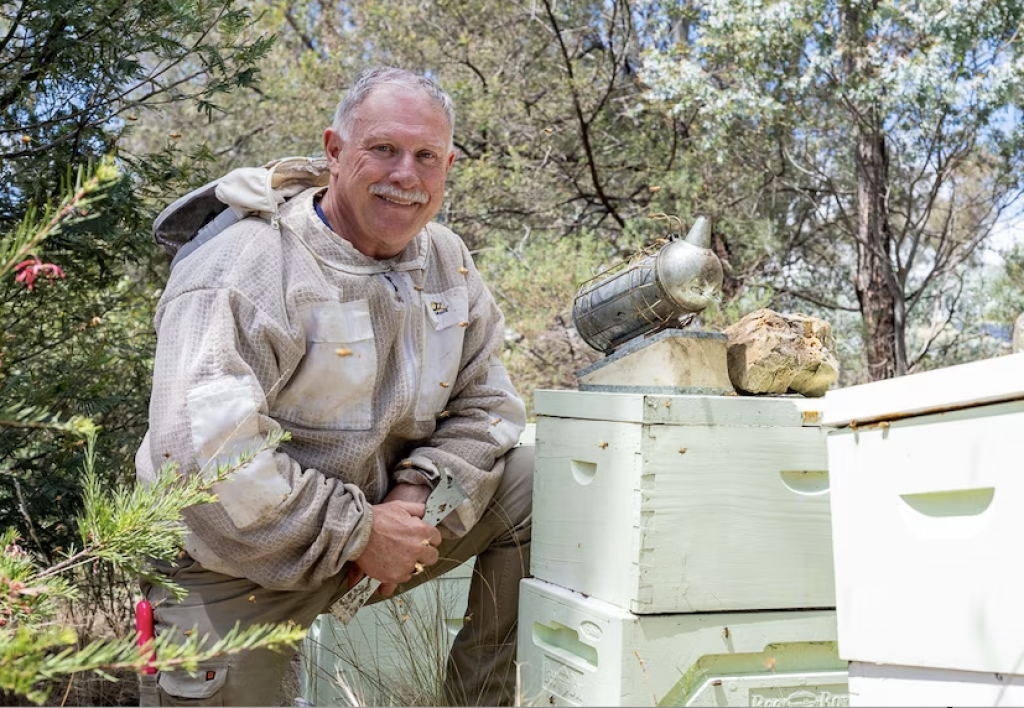
Beekeeper Mark Paterson shares practical insights into caring for honeybees and native bees, including hive basics, planting for pollinators, and creating thriving habitats. Come and learn about these amazing insects that are so crucial to life!
Be a Bee and Pollinate the Apple Tree
October 2nd 12.30pm-2.00pm Floriade Sprouts
Native Bee Magic: Discovering & Supporting Our Local Species @ Floriade Tulip Stage
October 7 @ 11:30 am – 12:15 pm
A talk for gardeners, bee-lovers, and anyone wanting to help our buzzing friends thrive. Join Charlie Blumer for a fascinating dive into the world of Australian native bees. Learn how to identify common species, understand their vital role in ecosystems, and discover simple ways to support them in your garden. A celebration of the beauty, diversity, and magic of our local pollinators.
Be a Bee and Pollinate the Apple Tree
October 7th 12.30pm-2.00pm Floriade Sprouts
54th Black Mountain Spring wildflower ramble
11 October 2025 – 9.30am sharp to 12noon or later
Celebrate the spring flowering on beautiful Black Mountain with a social ramble appreciating wildflowers in the tradition established by Nancy Burbidge, continued by George Chippendale, and then Jean Geue. Discover the surprising diversity of tiny orchids, bush peas, wattles and billy buttons on easy bush tracks with experienced guides and good company.
BOOKING ESSENTIAL https://www.trybooking.com/DEWYB
Growing Friends Spring 2025 Native Plant Sale
Saturday 18th October 8.30am until sold out Australian National Botanic Gardens, Clunies Ross St, Acton
Hundreds of groundcovers, small and large shrubs and trees will be available for the discerning native plant lover.
All plants are propagated from cuttings or seeds sourced from within the Gardens. A full list of plants will be available on the website closer to the sale.
Sales will be by card only. All proceeds go to the Friends to support the Gardens.
Canberra City Farm Open Day
Sunday 26th October 10am-4pm
2 Dairy flat Rd Fyshwick
A celebration of the first ten years at Dairy Road with a gala open day! The gate is open to all with a fun and inspirational community event:
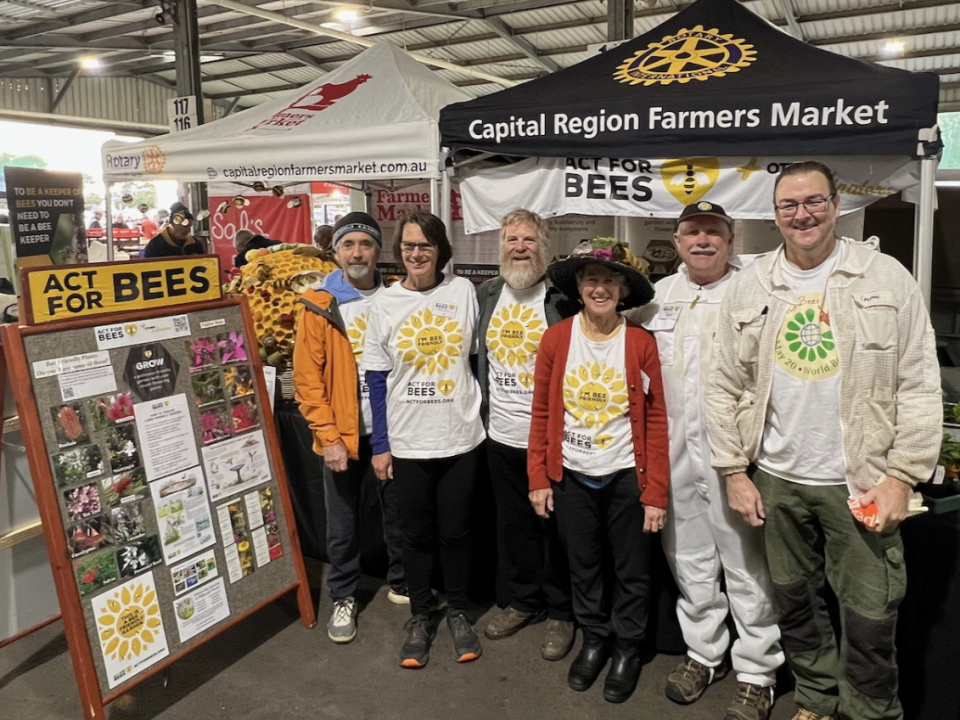
- shop at our stalls- ACT for Bees + Other Pollinators will be there with the workshop and stall
- learn from our workshops and tours
- enjoy the friendly community and meet the organisations that help make the Farm a centre for regenerative urban agriculture.
Learn more HERE
In preparation for Australian Pollinator Week, the 2025 Pollinator Photography competition
Closes 26th October

Open Winner 2024 Native bee. Paul Harrop
- First place wins $1500 and a 12-month subscription to Wild magazine.
- Second place wins $750 and a 12-month subscription to Wild magazine.
- Third place wins $500 and a 12-month subscription to Wild magazine.
- People’s Choice wins $750 and a 12-month subscription to Wild magazine.
School Competition
- Primary School Winner
- Individual prize: A Bees Are Amazing gift hamper and certificate valued at more than $100
- Class prize: $500 voucher awarded to the winner’s class
- Secondary School Winner
- Individual prize: A Bees Are Amazing gift hamper and certificate valued at more than $100
- A 12-month subscription to Wild magazine
- Class prize: $500 voucher awarded to the winner’s class
Enter HERE
Australian Pollinator Week 8th-16th November
To get ready for this important event why not take the QUIZ to see how well you know our pollinators. For happy snappers, the Photography competition will open on 23rd September and close at the end October, so get your snaps in. As they say, “you’ve got to be in it, to win it!”
Keep an eye on the Australian Pollinator Week website for details of events around the ACT & Region
Learn more HERE
ACT for Bees Inc AGM
ACT for Bees Annual General Meeting
Sunday 2nd November 2 pm
We’re looking forward to a review of the year that has been and celebrating the significant achievements made by our group with all of you who have joined us on this journey. Further details to be provided so stay tuned!
Interesting Links
Maybe you were introduced to the genus Boronia with May Gibb’s illustrations of the Boronia Babies. New research shows that the mysterious pollinator of this strange family of flowers in WA is the moth. Moreover, specific moths have a symbiotic relationship with particular species of Boronia, highlighting the importance of maintaining biodiversity for both plant and insect. Read more
With recent focus on the severe decline in bogong moth populations in the ACT region, this CSIRO article from 1992 highlights the importance of bogong moths and the berries from Podocarpus lawrencei in the diet of the pygmy possum. The interconnectedness of marsupial, moth and plant points to the need to maintain migration corridors in the alpine regions and to recognise that the health of one species cannot be separated from broader environmental concerns.
Read more
And for something completely frivolous and beautiful have a look at the work of Nayan and Venus Bird who create miniature paper sculptures of all sorts of flora and fauna, including a series on pollinators which is stunning.
See more!
A few interesting books….

Planting for Native Birds, Bees and Butterflies: How to create a garden that attracts Australian wildlife
by Jaclyn Crupi
Countless Australian species of birds, bees and butterflies are in decline or threatened with extinction, but you can help.
Writer and gardener Jaclyn Crupi shows us that protecting and fostering precious native wildlife starts in our own backyards.

The Bee Squad
by Judy Friedlander
Children around Australia are taking charge. Come and join the revolution!
From the coast of Western Australia to Sydney’s suburbs, young people are discovering nature in their neighbourhoods and setting up nesting boxes for birds, cleaning up waterways, planting to attract bees and koalas, and building insect hotels. They’re learning about amazing native species and finding ways to protect them.
Judy Friedlander will be in Canberra at the Canberra Writers Festival – Sunday 26th October 9.15am Design a Garden workshop
ACKNOWLEDGEMENT OF COUNTRY
We respectfully acknowledge the Traditional Custodians of the land on which we live and work, the Ngunnawal and Ngambri people. We pay our respects to their Elders, past, present and emerging.
We recognise the impact of climate change and increasing urbanisation on biodiversity. It is now even more important for us to plant and maintain our urban gardens and parklands to protect our bees, butterflies, birds and local wildlife.