
The 2026 Australian native bee calendar has landed!
January 10, 2026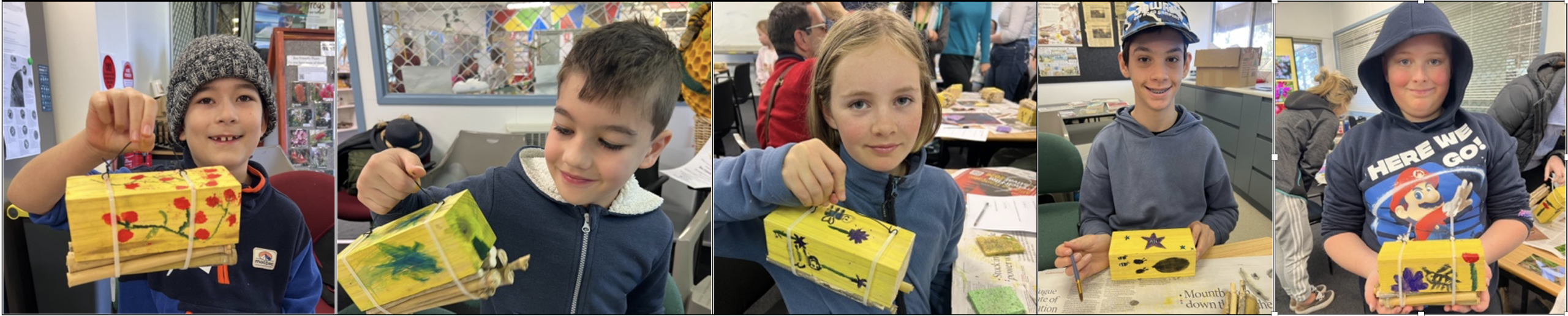
Autumn Abundance: Bees, Blooms & Community Action
April 28, 2026
We hope you’ve had a relaxing holiday and enjoyed the beauty of nature. This year has brought extraordinary flowering and abundant fruit; however, extreme heat, fires and floods have once again reminded us of the impacts of climate disruption on people and vast landscapes.
An article in this newsletter highlights the inspiring work of Dr Kit Prendergast, including her efforts installing native bee hotels in the jarrah forests of Western Australia following the 2019–20 fires. Her research has shown positive impacts on native bee populations and, excitingly, has led to the recent discovery of a new species of native bee.
We also have included an important update on how the Varroa mite is impacting our local Honeybee populations and subsequently the pollination of local fruit and vegetables as well as native plants.
ACT for Bees Update
ACT for Bees has been buzzing with activity thanks to the ACT Government Environmental Grants Program 2025 and our enthusiastic, knowledgeable volunteers.
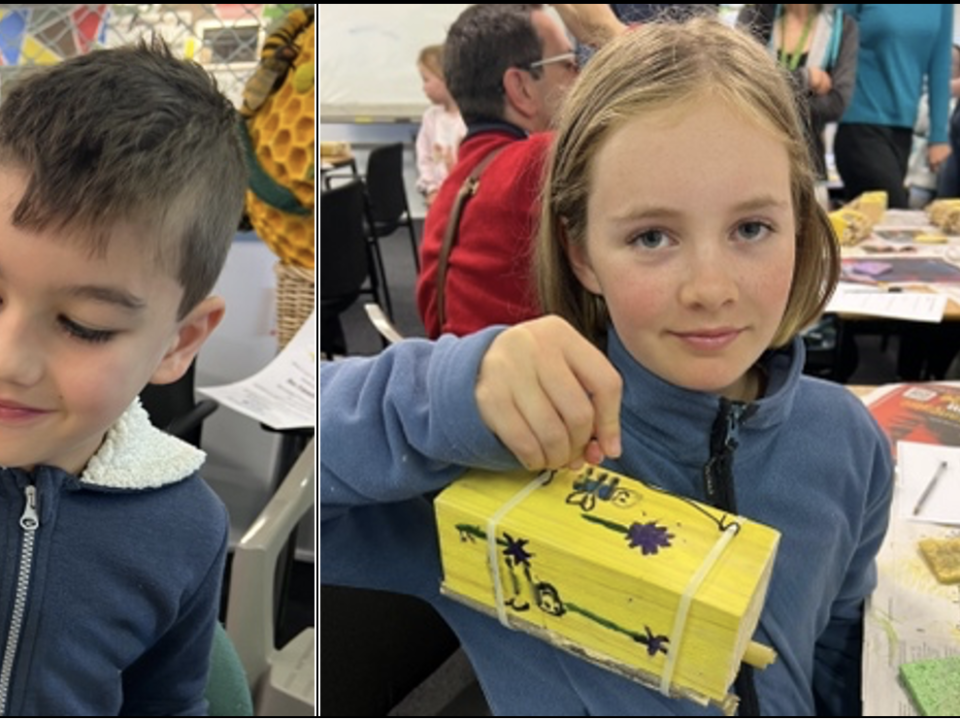
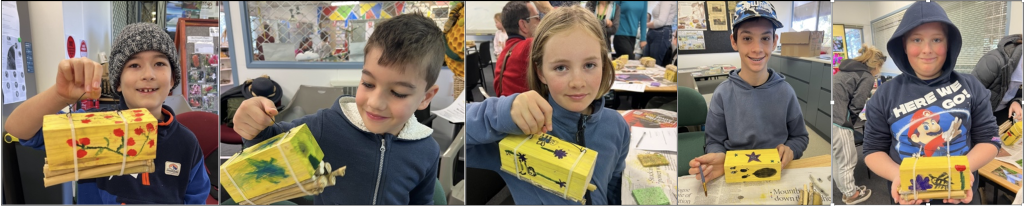
We have completed three very successful workshops with Canberra City Farm and two with Majura Scouts, resulting in many beautiful bee nesting spaces being created (see photos below).
Upcoming Workshop – Valentine’s Day
Join us for our next Bee Hotel for native bees workshop with the Ginninderra Catchment Group on Saturday 14 February (Valentine’s Day). Send a message of love to our local native bees by learning more about them and creating a nesting site to take home.
There will be two additional workshops delivered with the Junior Ranger Program and the Molonglo Conservation Group, completing this grant initiative.
This project is funded by the ACT Government through the Environmental Grants Program 2025.
We hope that you will join in this fun activity
Best wishesJulie, Micah, Mark, John, Charlie, Didi, Matt and Inga
The ACT for Bees + Other Pollinators team.


MAKE YOUR OWN NATIVE BEE HOTEL Workshop
Saturday 14th February 10.00am-12pm
Flynn Community Hub, ACT
| Send a love message to our native bees by making a bee hotel for your garden.Join us for a hands-on workshop where you’ll create a welcoming nesting spot for native bees and other important pollinators. Our bees need our help, and there’s so much we can do right in our own backyards.We’re excited to be teaming up with the Ginninderra Catchment Group to deliver this Australian native bee workshop, where you’ll learn about the wonderful diversity of native bee species found in Canberra and the surrounding region.During the workshop, participants will build a simple, bee-safe hotel designed specifically for local native bees. Many commercially available bee hotels are unfortunately unsuitable, often with holes that are too short or made from inappropriate materials. This workshop ensures you’ll go home with a bee hotel that truly supports native bees.Who is this for? This workshop is suitable for children 8 years and older, accompanied by one adult. One bee hotel per family ticket.We also ask participants to help us support citizen science by monitoring native bee activity in their hotel once it’s installed at home and recording observations on Canberra Nature Mapr.Cost Thanks to the generous support of the ACT Government 2025 Environmental Grants Program, this workshop is offered free of charge. A $10 place-holding fee applies and will be refunded on the day. Come along, learn something new, and make a real difference for our native bees! |

The 2026 Australian native bee calendar has landed!!!
A spectacular calendar with so much information and beautiful photos of native bees from all over Australia. A perfect gift for overseas visitors (6 have been taken to Finland as landing gifts by a friend and they’re clamouring for more!)
Go to Facebook Be Aware of your Native Bees – Featured and scroll down for the information about how to order and cost.
To order… email Lisa Warman at lisawarman72@icloud.com and let her know how many you would like and PLEASE provide your full name and address
Prices are in the comments… make sure you have ‘All comments’ selected 
The calendar is 297 x 297mm closed. 297 x 594mm open. Squares are 40 x 40mm. Plenty of room for jotting down those important events (and the dreaded bills!) Printed on quality stock, it is a professional piece, containing amazing photography and a wealth of information
January begins with the Cuckoo bees who are often found with our favourite Blue banded bees.

Important and Concerning News:Varroa Mite
We also need to share some difficult news, with you thanks to members of our group Mark Paterson (President Canberra Region Beekeepers) and Micah Wood (ACT Government Biosecurity) and the ABC.
A deadly parasite, the varroa mite, is expected to wipe out around half of the ACT’s 6,000 beehives within the next two years, placing local fruit and vegetable production at risk.
According to the ABC, the rapid spread of varroa is likely to significantly reduce pollinator numbers, affecting farmers as well as backyard food growers across the region.
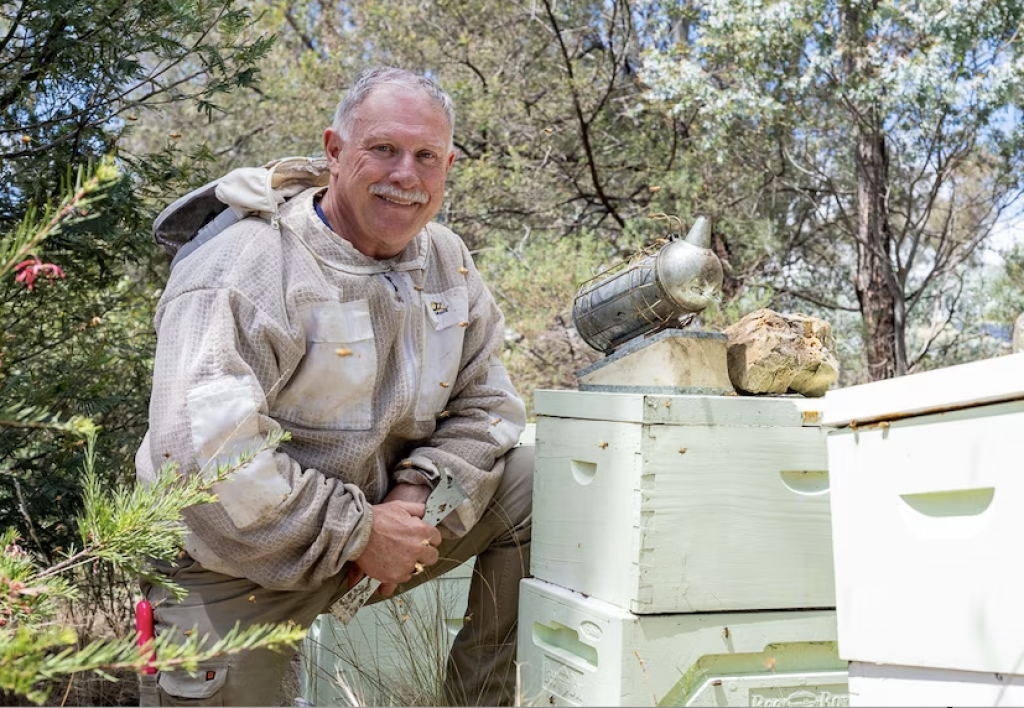
Mark Paterson, who previously managed 30 hives in California while living with varroa for 12 years, explains:
“Once varroa is established, the population of managed hives in Canberra will drop to about half of what it is now, plateau for a period of time, and then slowly begin to rebuild. It’s likely a five-year cycle to return to something resembling current levels.”
Micah Wood urges all beekeepers to register their hives with the ACT Government so biosecurity officials can provide timely advice and support.
Beekeepers are encouraged to monitor hives at least monthly and use a combination of chemical and mechanical controls where appropriate.
“Once varroa is in your hive, it can devastate it within two to three months, so it’s really important to catch it early,” Mr Wood said.
Read the ABC article: Deadly varroa mite threatens half of Canberra’s beehives and also a live Facebook post.
UPCOMING EVENTS
Conservation Council ACT with ACT Environment Minister Suzanne Orr MLA
You’re warmly invited to a community town hall with ACT Environment Minister Suzanne Orr MLA on Wednesday the 18th of February from 6-8pm at Lyneham High School.
This town hall will be an opportunity to discuss the big environmental challenges facing the ACT and hear directly from the Minister about what the ACT Government is doing in response to these challenges. Most importantly, there will be time for questions and perspectives from the floor, so we can place community voices front and centre in decisions about our environment.
To find out more and secure your spot at this event, please register for free here.
Canberra City Farm events
Founded in 2012, CANBERRA CITY FARM (CCF) is a vibrant 2-hectare hub in Kamberri/Canberra, nestled beside the Jerrabomberra Wetlands on Ngunnawal land.
The Farm has grown into a vibrant hub for learning, collaboration, and action, inspiring Canberrans to reconnect with nature and create a greener, more sustainable future. There are so many ways to be involved in Canberra City Farm. They host a wide range of regular and one off events throughout the year, from educational workshops and expert talks to hands-on Farm activities and seasonal celebrations. They have regular working bees, Monthly Mingles and plant clinics.
ACT for Bees + Other Pollinators is very grateful to CCF for our monthly meeting space and also workshop space. The Canberra & Region Beekeepers have their apiary there too.Check out their website HERE
Canberra Environment Centre workshops
Fun ways to learn skills in gardening, composting and recycling
Check out their website HERE
SEE-Change Climate Wise Verge Gardens
Three experienced landscapers will be designing and installing three climate wise verge gardens. Details on how to replicate the design are below.
Xeriscape/succulent waterwise garden
Water capture permaculture garden – TBA
Native temperate grassland garden – TBA
The gardens will showcase the beauty of climate wise gardens and enhancing biodiversity in the suburbs.
The first of these was held in Monash in September 2025.
Follow the progress of these gardens on the Verge Trail and see other exciting verge gardens.Check out their website HERE
INTERESTING LINKS
Native bee research
Kit Prendergast on her discovery of a new native bee in WA and the importance of research into native bees given the often unique relationship between specific flora and pollinators.
Read more HERE
Kit Prendergast on her work installing native bee hotels in the jarrah forests of WA after the fires of 2019-20 and the impact on native bee populations.
Read more HERE
A few interesting books…..

Seeds: Time capsules of life
by Rob Kesseler and Wolfgang Stuppy
This magnificent book which bridges art and science is now in its fourth edition. The extraordinary images are accompanied by a text which explain the endless variety of seeds and the ingenuity of evolution. The book encourages us to think about the future of plant diversity, especially global food supply which depends completely on the successful production of seeds. A wonderful present for someone special.

Charles Weston & his three million trees
by Robert Macklin with Dr John Gray
This highly readable story of the tree planter of Canberra, Charles Weston, offers readers new insights into the making of the national capital. It is also a story of three million trees and shrubs from Australia and around the world, planted to create a template garden city, less susceptible to climate change.
This is a book of interest to Canberran gardeners, garden-enthusiasts, park-goers and bushwalkers, and their interstate visitors. Lavishly illustrated with both historic and modern images that highlight the impact of Westons plantings on the Federal Capital.
Books for younger readers…..

Caring for Country: First knowledges for younger readers
by Bruce Pascoe & Bill Gammage
The First Knowledges series for younger readers celebrates the wisdom and ingenuity of the First Peoples of Australia. As with the series written for adults, this book seeks to explains how we might take better care of environment today by using methods practised by Aboriginal and Torres Strait Islander Peoples for tens of thousands of years. The text has been adapted by Jasmin McGaughney and is accompanied with colourful illustrations by Savi Ross. Suitable for ages 5-10.