
Buzz Across Borders: Cormac’s Hive Tales from the Hill
May 9, 2025
Buzzing for biodiversity at Ginninderry
June 10, 2025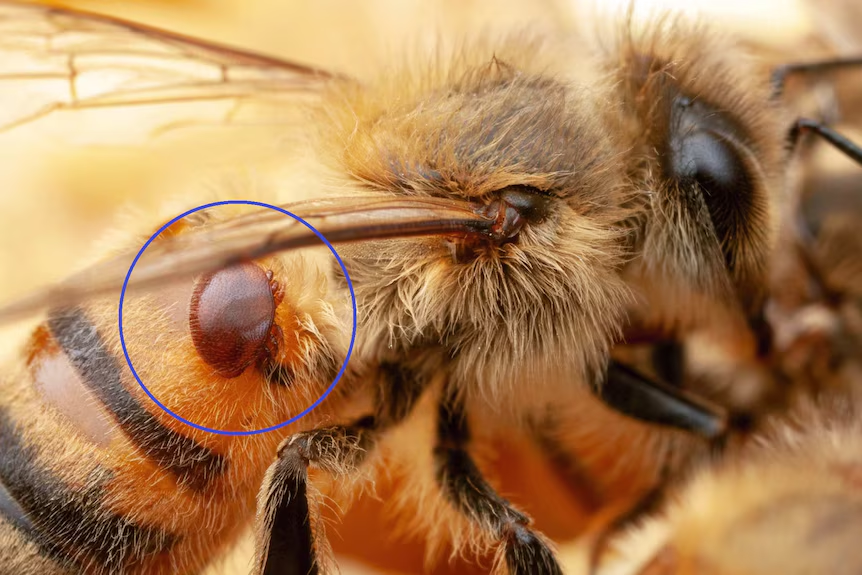
The destructive Varroa mite has been detected in the Australian Capital Territory, marking another alarming milestone in the growing pressures facing honey bee populations and the food systems that depend on them.
About the size of a red sesame seed, the Varroa mite joins a growing list of threats affecting bees across Australia, alongside climate change, agricultural chemicals, monoculture farming, habitat loss, and a range of diseases and pests.
If you enjoy eating fresh fruit, vegetables, nuts and many other everyday foods, this is an issue worth paying attention to. The connection between bees and food security is much closer than many people realise.
The pollination connection
Food production relies on pollination, which occurs in two main ways. Wind pollination supports crops such as cereals and corn, while insect pollination—primarily by bees—makes it possible to grow many of the fruits, vegetables, nuts and seeds that form an important part of our diet.
Without adequate pollination, food production suffers.
A good example is vanilla. Vanilla remains one of the world's most expensive spices because it must be pollinated by hand in most commercial growing regions. When vanilla was introduced to other parts of the world, its natural pollinating insects were left behind, leaving growers to pollinate every flower by hand.
One of the most valuable services bees provide is pollinating the crops that feed us. Around one-third of the food we eat depends on bee pollination, making healthy bee populations essential for food security.
Varroa mite: A devastating parasite
Varroa mites are parasites that reproduce in honey bee brood cells, where they feed on developing bees and spread a range of harmful viruses. The combination of direct damage and viral infection can weaken colonies dramatically and, if left unmanaged, destroy entire hives within months.
Beekeepers are already using several approaches to help control Varroa populations.
Chemical treatments include synthetic miticides, although mites can eventually develop resistance, requiring beekeepers to rotate treatment options. Softer treatments, including some based on essential oils, can also help reduce mite numbers.
Mechanical methods involve temporarily interrupting the queen's egg laying. Without developing brood, the mites cannot reproduce, helping to break their lifecycle.
Thermal treatment raises the brood chamber temperature from around 36°C to 43°C for several hours, killing the mites while leaving the bees unharmed.
Perhaps the most promising long-term solution is breeding hygienic queen bees. Some colonies possess genetics that allow worker bees to detect mite-infested brood and remove it before the mites can reproduce. Developing these resilient bloodlines, however, will take considerable time and effort.
Local action needed
The detection of Varroa mites in the ACT highlights the importance of supporting local beekeepers and protecting the pollinators our food production depends on.
If you keep honey bees, now is the time to learn how to identify Varroa mites, monitor your hives, and understand your responsibilities under the new ACT Biosecurity Beekeeping Regulation 2025.
For more information on Varroa mite management and regulations in the ACT.