

Treatment Free Beekeeping: August workshops
August 22, 2025
The 2026 Australian native bee calendar has landed!
January 10, 2026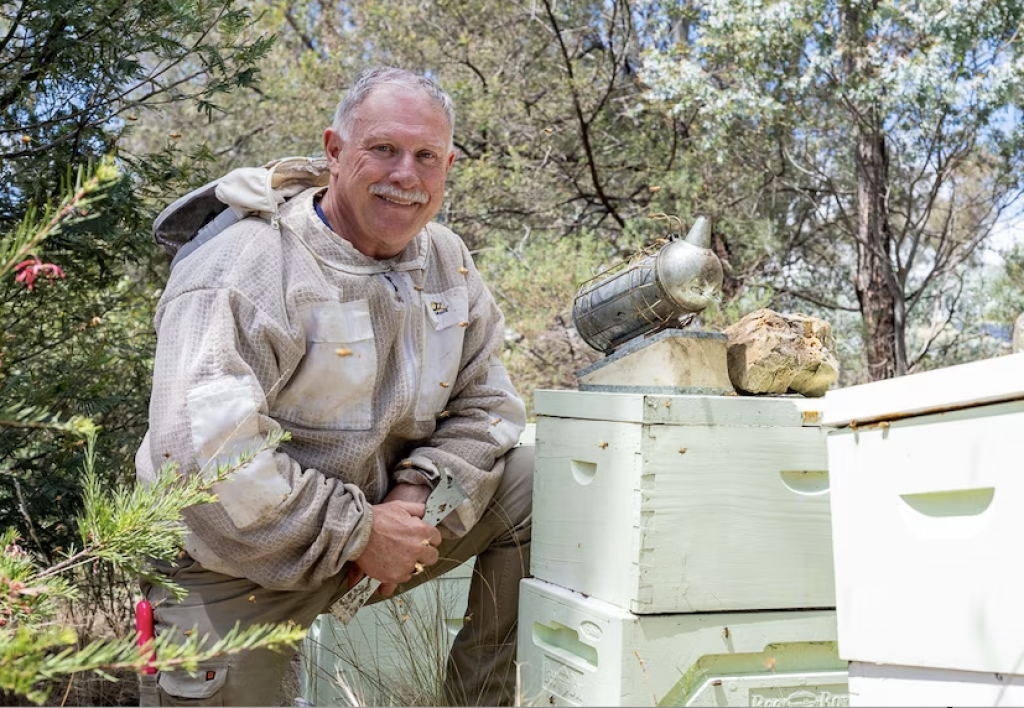
As the varroa mite reaches the ACT, concerns are growing about its impact on honey bees, pollination and local food production. Mark Paterson and Micah Wood from ACT for Bees and Other Pollinators discussed the issue with ABC News.
The fast-spreading parasite, Varroa mite (Varroa destructor), is expected to wipe out half of the ACT’s 6,000 bee hives within two years, putting local fruit and vegetable crops at risk.
Varroa mites are 1 to 2 millimetre-long parasites that attach to honey bees, eventually killing the bees and their colonies.
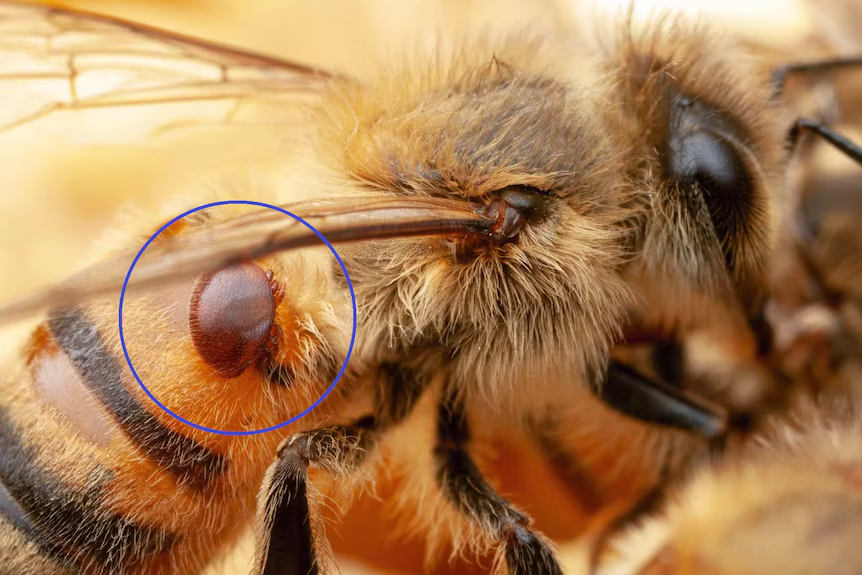
The varroa mite is a parasite that latches onto bees. If left untreated, it weakens and eventually kills them. (Supplied: Alex Wild, UT Austin)
The ACT’s first infestation was found in a hive in Kowen in April this year.
The government has since received reports of eight cases of Varroa mites — five of which had been confirmed.
ACT Biosecurity Engagement Officer, Micah Wood, predicts the Varroa mite will be present in about half of the ACT’s hives within a year, before spreading to all hives to varying degrees within two years.
"Looking at the other countries that have dealt with varroa, we’re looking at losing 50 per cent of our hives here in Canberra" Mr Wood said.
“Varroa spreads very quickly once it gets in your hive. If you’re not helping the bees manage, it’s going to take over.”
Varroa mites have also been found in South Australia, New South Wales, Victoria and Queensland.
Bee losses to hit local food production
The widespread loss of pollinators in the ACT is expected to disrupt fruit and vegetable production for farmers and backyard vegetable patches alike.
Canberra Regional Beekeepers Association President, Mark Paterson, lived in California for 12 years and maintained 30 hives with the Varroa mite through that time.
"Once Varroa is established, the population of managed hives in Canberra will drop down to half what they are now and plateau for a period of time and then slowly, gradually start to build back up" he said.
"So [there’s] probably about a five-year cycle to get back to some degree of where we are today".
Mark Paterson says the bees will develop a resistance to Varroa mites.
Mr Paterson said the loss of so many local bees would have a direct impact on the amount of produce available at farmers markets or from local providers.
"When you have a reduced population of pollinators, your production either stops or declines or has a significant negative impact" he said.
He also said the Varroa mite would affect backyard vegetable patches and fruit trees, yielding little or producing deformed fruit for several years.
"For some they won’t get any fruit — for example, a strawberry needs to be visited [by bees] about 20 times to create a strawberry" he said.
"You may get some vegetables and some fruit, but I think it will be impacted to some degree".
"If you don’t know what you’re doing, you’ll probably lose your hive".
Mr Wood acknowledged that beekeepers in the ACT are facing a tough road for the next several years, but could keep their hives alive over the long-term by managing the Varroa mite.
"It’s going to be about training beekeepers and teaching them how to help the bee live with Varroa, because varroa is here to stay" he said.
"We’ll be looking to help those beekeepers through the next two years and rebuild their colonies".
Mr Wood urged beekeepers in the region to register their hives with the government so biosecurity officials could give them information as to how to keep their hives healthy.
