
Book review: Rewilding Suburbia
October 14, 2026
ACT Legislative Assembly unanimously supports a motion to protect pollinators and strengthen biodiversity across Canberra.
In a significant step towards making Canberra a Bee and Pollinator Friendly Territory, the ACT Legislative Assembly unanimously supported a motion introduced by Taimus Werner-Gibbings MLA, recognising the vital role of bees and other pollinators in food security, biodiversity, healthy ecosystems and environmental resilience.
22 October 2026 marked an exciting milestone for bees, pollinators and biodiversity in the ACT!
The motion was strengthened by amendments introduced by Jo Clay MLA, at the request of ACT for Bees + Other Pollinators, recognising the importance of connected habitats and pollinator-friendly landscape planning across the Territory.
For ACT for Bees, which has advocated for a whole-of-Territory approach to protecting pollinators for several years, this is a wonderful development!
Why does this motion matter?
Australia is home to more than 1,700 species of native bees, alongside an extraordinary diversity of other pollinators, including butterflies, moths, hoverflies, beetles, wasps and birds.
These remarkable creatures are essential for the reproduction of many flowering plants, supporting food production, native vegetation and the complex food webs upon which healthy ecosystems depend.
Yet pollinators face increasing threats from habitat loss, fragmented landscapes, pesticide use, climate change, pests and diseases.
The arrival of Varroa mite in the ACT in April 2025 has highlighted the vulnerability of our pollination systems. During the Assembly debate, members reported estimates that around half of the ACT’s 6,000 honeybee hives had been affected, with more than 1,000 hives lost.
Many Canberra gardeners have noticed fewer honeybees visiting their flowers this spring. Although Varroa does not infest native bees, its impact on honeybee populations has serious implications for food production and pollination security.
Protecting pollinators is not simply about saving bees. It is about safeguarding the living systems that sustain us all.
What did the Legislative Assembly agree to?
The motion calls on the ACT Government to:
- Continue supporting beekeepers managing Varroa mite.
- Promote pollinator-friendly plants through environmental restoration and the review of Municipal Infrastructure Standards.
- Support pollinator projects through ACT Environment Grants.
- Develop practical guidance for households, schools, gardeners and community groups.
- Report to the Assembly on progress by the last sitting day of 2027.
Importantly, the amendments introduced by Jo Clay strengthened the motion by calling for habitat connectivity and year-round flowering resources to be considered through the developing ACT Landscape Plan and final Nature Conservation Strategy.
As Jo Clay explained:
“A bee and pollinator-friendly ACT is about more than individual gardens and individual community groups. It is about creating whole landscapes, policies and practices that support pollinators across our suburbs, parks, reserves, farms, schools, workplaces and public spaces.”
This reflects the vision ACT for Bees has been advocating: a network of flowering trees, shrubs, grasses and groundcovers connecting our gardens, streets, parks, schools and natural areas.
Thoughtful planting could also replace suitable areas of frequently mown grass with biodiverse landscapes that provide food and habitat for pollinators while reducing maintenance.
Ginninderry shows what is possible
During the debate, Jo Clay highlighted Ginninderry’s innovative pollinator corridor project, which incorporates a 200-metre by 200-metre planting grid, diverse flowering species and native bee hotels.
ACT for Bees has been delighted to collaborate with Ginninderry on pollinator habitat and community education initiatives.
This demonstrates how biodiversity can be integrated into urban development from the outset, rather than being treated as an afterthought.
A shared commitment to a pollinator-friendly Canberra
It was heartening to hear support from across the Legislative Assembly.
Taimus Werner-Gibbings acknowledged the work of ACT for Bees and other community organisations, emphasising the importance of education and practical action.
Elizabeth Lee MLA supported the motion and amendments while highlighting the need for funding to deliver meaningful conservation outcomes.
Thomas Emerson MLA called for stronger integration of pollinator protection into planning, habitat restoration and environmental policies, including consideration of pesticide impacts.
Environment Minister Suzanne Orr welcomed the amendments and acknowledged ACT for Bees’ longstanding advocacy. She also referred to her recent meeting with ACT for Bees and the ACT Government Landscape Architect to explore opportunities within the developing Landscape Plan.
The unanimous support demonstrates that protecting pollinators is an issue that can unite our political representatives and community.
Education: Inspiring the next generation
Education remains at the heart of ACT for Bees.
In October 2026, we celebrated the launch of new Australian Native Bee curriculum resources for Years 4–7, developed in partnership with Cool.org.
These resources explore native bee diversity, adaptations, pollination, food webs and environmental change.
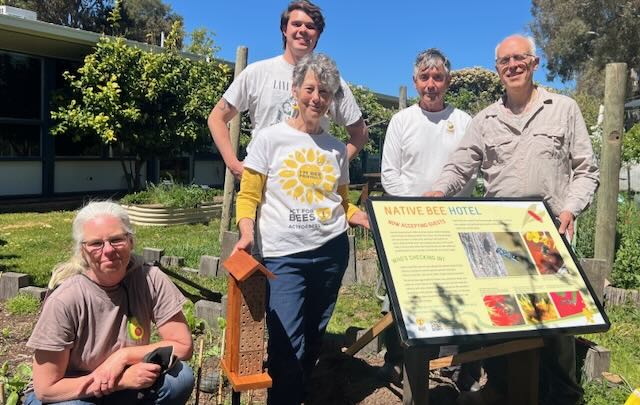
They complement our ACT Government Environment Grant project, Connecting Children to Nature Through Bee Hotels, which has supported hands-on workshops, bee hotels and educational signage in schools and other learning environments.
Together, these initiatives encourage young people to understand and care for the remarkable relationships between plants, pollinators and healthy ecosystems.
What can we do to support bees and pollinators?
Everyone can make a difference, whether at home, at work, at school or in our communities!
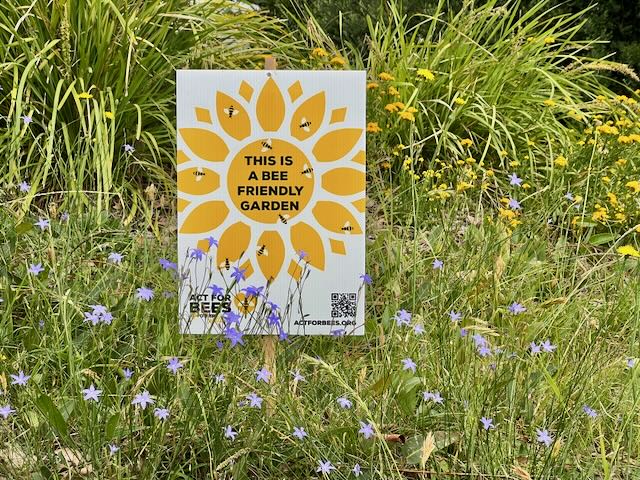
1. Plant flowers throughout the seasons. Choose diverse flowering plants, especially locally appropriate natives, to provide nectar and pollen year-round. Include different flower shapes to support a variety of pollinators.
2. Create nesting habitat. Leave some bare, well-drained soil for ground-nesting bees, retain suitable hollow stems and natural materials, and consider well-designed native bee hotels.
3. Avoid pesticides. Encourage beneficial insects, build healthy soils and use ecological gardening methods to manage pests.
4. Provide safe drinking water. A shallow dish with pebbles or stones allows bees and other insects to drink without drowning.
5. Make workplaces and public spaces pollinator-friendly. Encourage flowering gardens, native plantings and reduced mowing in suitable areas. Even small gardens can connect larger habitats.
6. Help schools buzz with biodiversity! Create pollinator gardens, observe visiting insects and explore the new Cool.org Australian Native Bee curriculum resources.
7. Become a citizen scientist. Photograph and record pollinators through Canberra Nature Map (NatureMapr) or iNaturalist to help build knowledge of local biodiversity.
8. Inspire your community. Encourage neighbours, schools, businesses and community groups to create connected pollinator habitats and advocate for biodiversity-friendly public landscaping.
Together, let’s make the ACT a Bee and Pollinator Friendly Territory!
The Legislative Assembly’s unanimous support is an important milestone, but now comes the exciting challenge of turning commitment into action.
ACT for Bees looks forward to continuing collaboration with government, landscape architects, planners, researchers, educators, beekeepers and community groups, while aligning our work with the emerging Australian Pollination Strategy and the Canberra Region Local Food Strategy 2024–2029.
Every garden matters, but together we can create a whole Territory that supports pollinators!
ACT for Bees + Other Pollinators Inc.
Educating, advocating and connecting communities for a Bee and Pollinator Friendly Territory.
Source: ACT Legislative Assembly debate, 22 October 2026 — Environment: Bees and Other Pollinators.