
Chalkbrood controlled: apprentice beekeeper stumbles on solution to disease wreaking havoc in Alice Springs
June 16, 2016Bees, Food and Education: Lessons from Beechworth Honey
February 8, 2017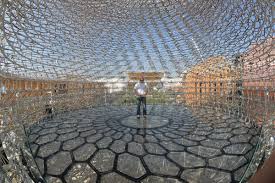
What if you could experience life from a bee’s perspective?
At the Royal Botanic Gardens, Kew in London, visitors can do exactly that through The Hive – a remarkable fusion of art, science and conservation that brings the hidden world of honey bees to life.
Standing 17 metres tall in the middle of a wildflower meadow, The Hive resembles a giant honeycomb suspended in the air. But this is far more than a sculpture. Designed by artist Wolfgang Buttress, the installation is connected to a real honey bee colony living elsewhere in the gardens. Sensors monitor the bees’ vibrations and activity, which are then translated into light and sound inside the structure.
As visitors walk inside, 1,000 LED lights pulse and glow in response to the colony’s movements, while an immersive soundscape recreates the hum and communication of a living hive. The result is a surprisingly emotional experience that allows people to feel connected to creatures they rarely notice.
Originally created as the centrepiece of the UK Pavilion at the 2015 Milan Expo, The Hive found a permanent home at Kew Gardens in 2016. Surrounded by bee-friendly wildflowers, it serves as both a celebration of pollinators and a reminder of the challenges they face.

What makes The Hive so powerful is that it transforms statistics and scientific warnings into something tangible. Instead of simply reading about pollinator decline, visitors can experience the complexity, communication and vitality of a bee colony for themselves.
For anyone passionate about bees, conservation or innovative public education, The Hive offers an inspiring example of how art can help people understand why pollinators matter. After all, when we can hear the buzz, see the signals and feel the vibrations, it’s much easier to appreciate just how much our world depends on these extraordinary insects.