
Grow
GROW A POLLINATOR-FRIENDLY
GARDEN WITH YEAR-ROUND
FLOWERING PLANTS
ACT Resources
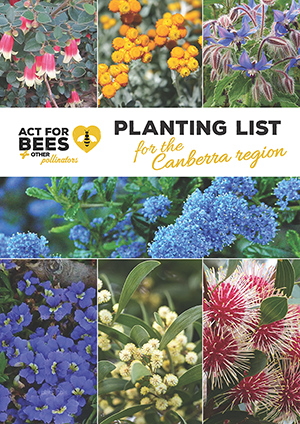
Planting List for the Canberra Region
The Planting List for the Canberra Region has been produced by ACT for Bees and Other Pollinators to support a "Bee and Pollinator Friendly Canberra" and is aimed primarily at home gardeners.
It includes information on how to provide pollinator friendly habitats, pest management practices and information on both native and exotic plants that attract and support pollinators.
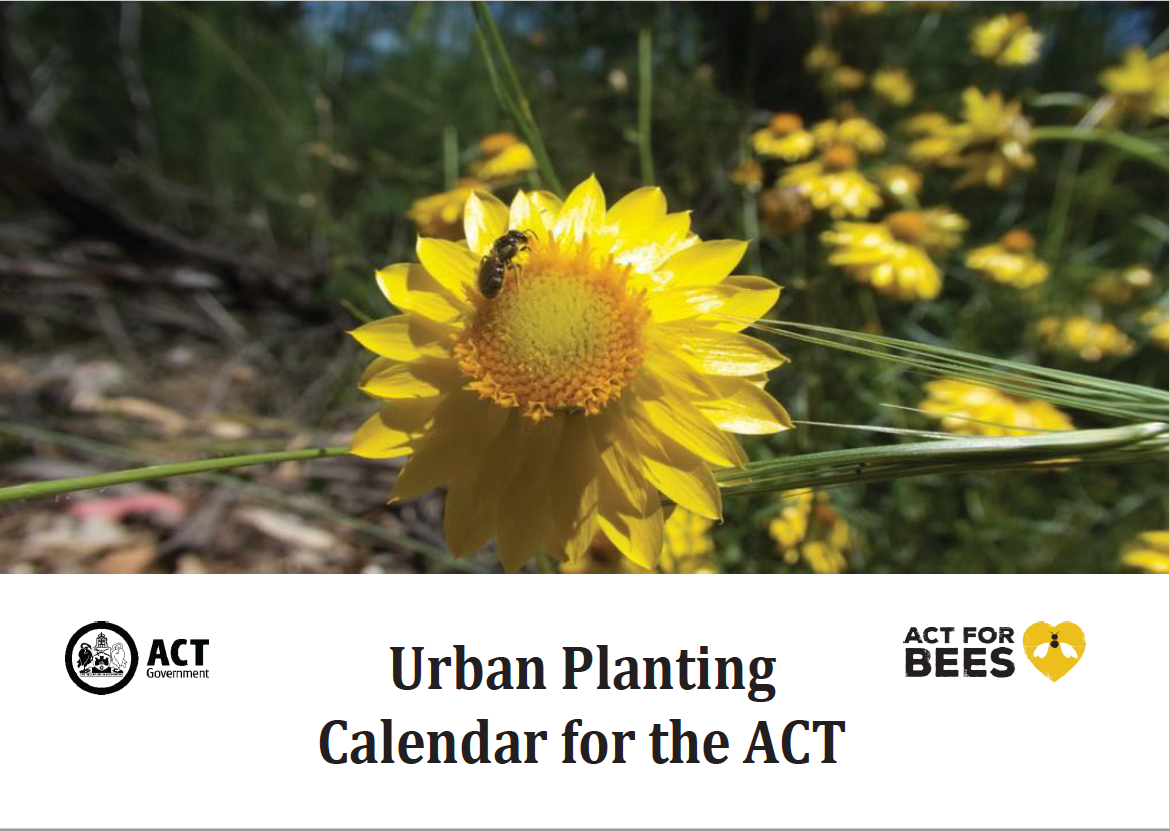
Urban Planting Calendar for the ACT
The ACT Government’s Urban Planting Calendar helps gardeners, community groups, developers and land managers select trees, shrubs, grasses and groundcovers that provide year-round food and habitat for bees, butterflies, birds and other beneficial insects. Developed with ACT for Bees and Other Pollinators, it supports strategic planting to strengthen biodiversity and create connected pollinator-friendly landscapes across Canberra.
Resources for other regions
Wheen Bee Foundation Planting Guides
The Wheen Bee Foundation is an Australian charity supporting research, education and conservation initiatives that strengthen bees, improve pollination and support food security and ecosystem health. Their Powerful Pollinators planting guides help gardeners, landholders and communities choose locally appropriate plants that provide food and habitat for bees and other pollinators.
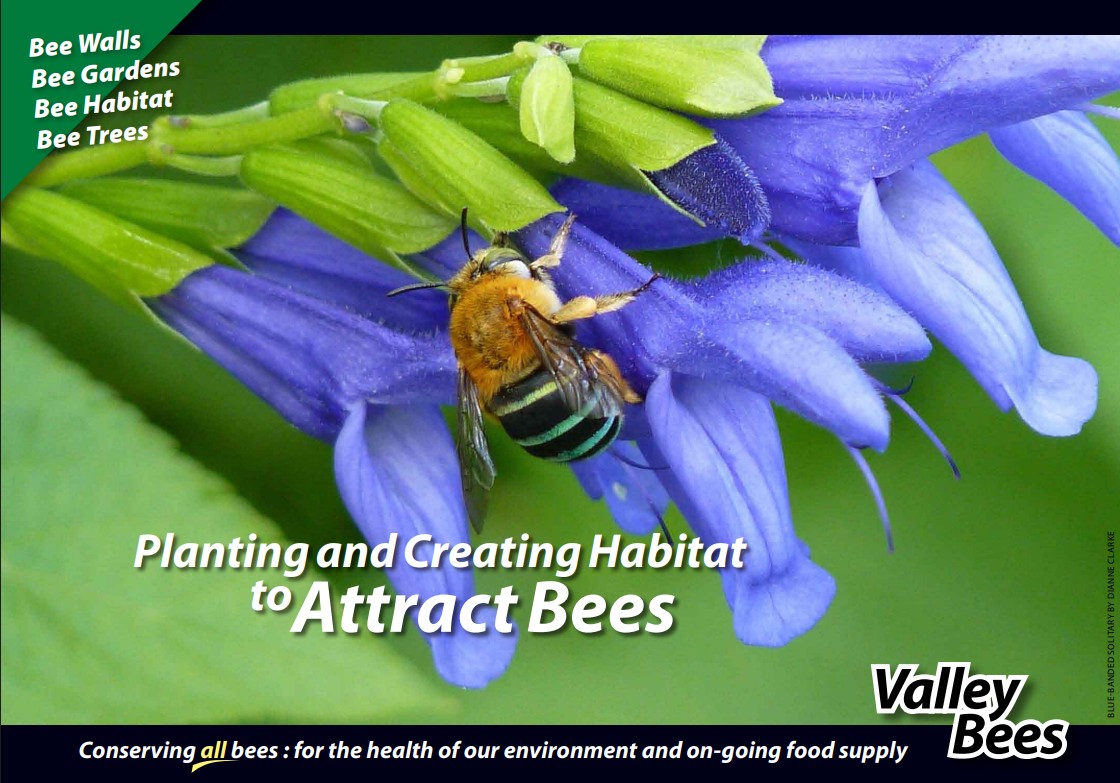
Planting & Creating Habitat to Attract Bees - Northern NSW
A great resource from the Valley Bees community in Northern NSW, containing information on plants that flower throughout the seasons and lots of ideas for bee hotels.
Planting Seeds - Sydney NSW
Planting Seeds is a sustainability program with a focus on environmental protection and sustainable education.
It fosters environmental sustainability in urban and peri-urban environments, through a range of initiatives , including working with schools.
The Heart Gardening Project - Melbourne VIC
The Heart Gardening Project is creating the Melbourne Pollinator Corridor (MPC), a 8km community-driven wildlife corridor, focusing on native bees and other pollinating insects. It will link 2 large green patches that run along the Birrarung, Westgate Park and the Royal Botanic Gardens.
Pollinator Link - Brisbane QLD
Pollinator Link: Bringing Back the Butterflies, Bees and Birds has great resources for the Brisbane region and invites the community to join in creating pollinator corridors in the region.
Learn to Build a Bee Hotel
The Buzz on Wild Bees Facebook group has an excellent booklet by Kit Prendergast on building Native Bee Hotels.
BEWARE of shop bought insect hotels as they are often not deep enough (>15 cm) for the most common native Australian bees.
What does pollinator-friendly habitat look like?
The problem with pesticides
Healthy pollinators are essential for healthy ecosystems, thriving gardens and the food we eat. Yet many commonly used pesticides can unintentionally harm bees and other beneficial insects. Discover why this matters, learn about the chemicals of greatest concern, and explore safer ways to manage garden pests without harming pollinators.
Organic seeds, seedlings and garden products suppliers
Organic food suppliers
Organic food is grown without the use of synthetic pesticides, herbicides, fungicides and fertilisers. Organic farming practices tend to take care of biodiversity by increasing soil fertility, conserve water, reduce soil erosion and reduce pollution.
Where ever possible, buy locally produced organic food from your supplier or Farmers Market.